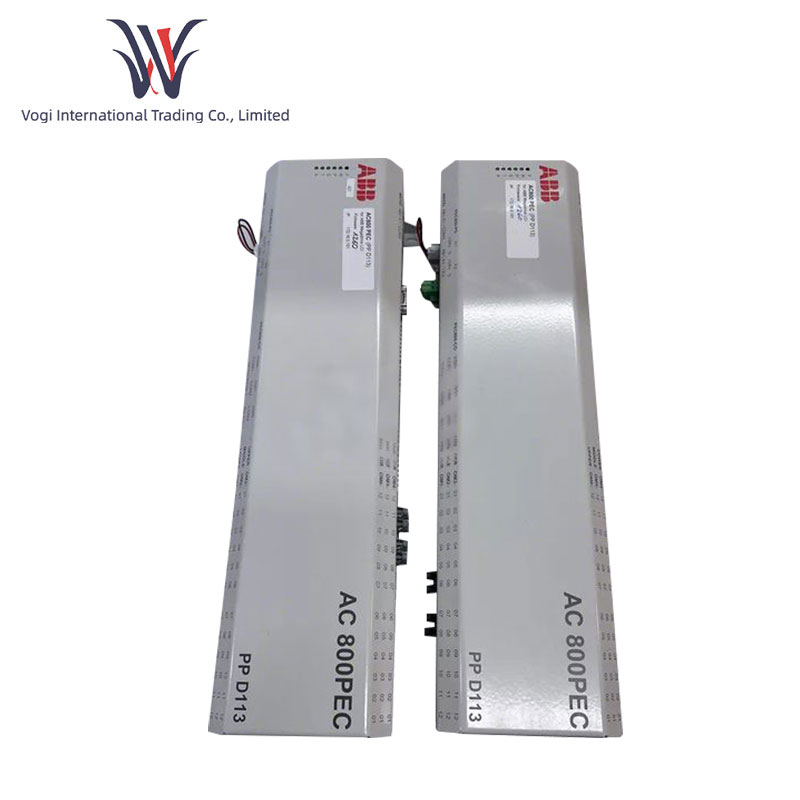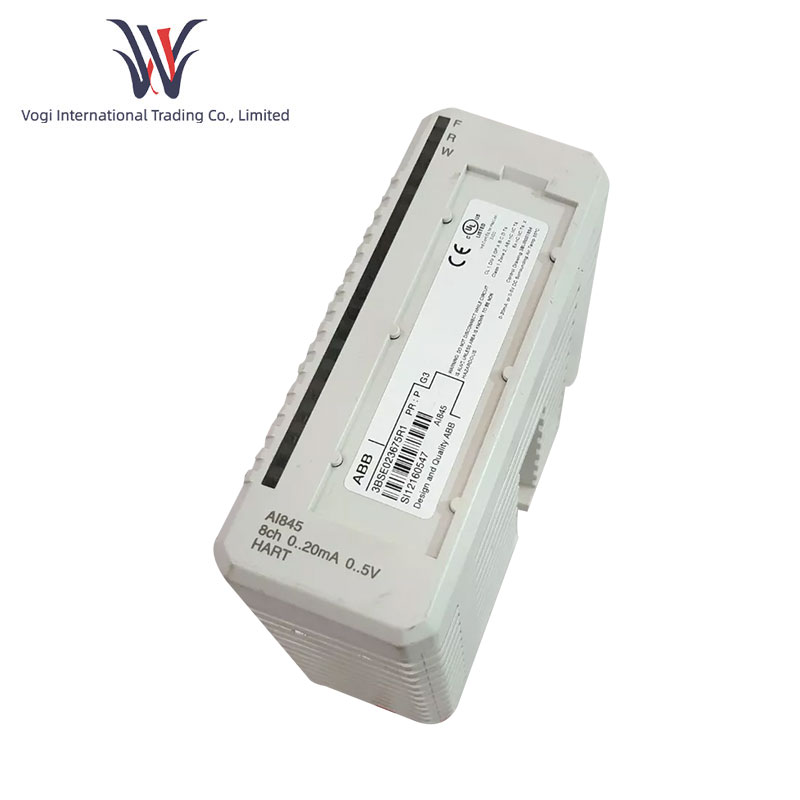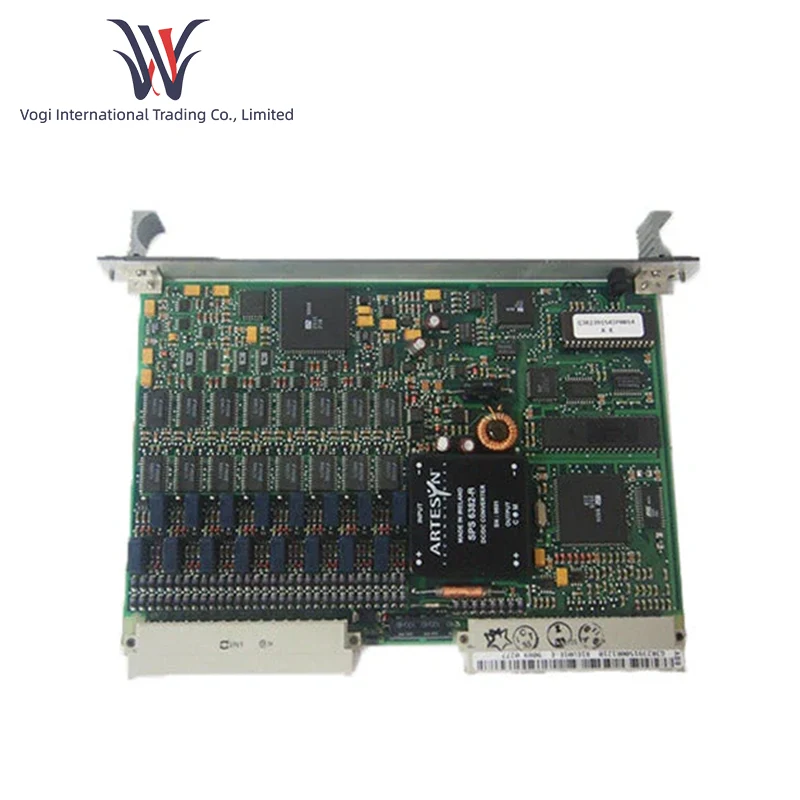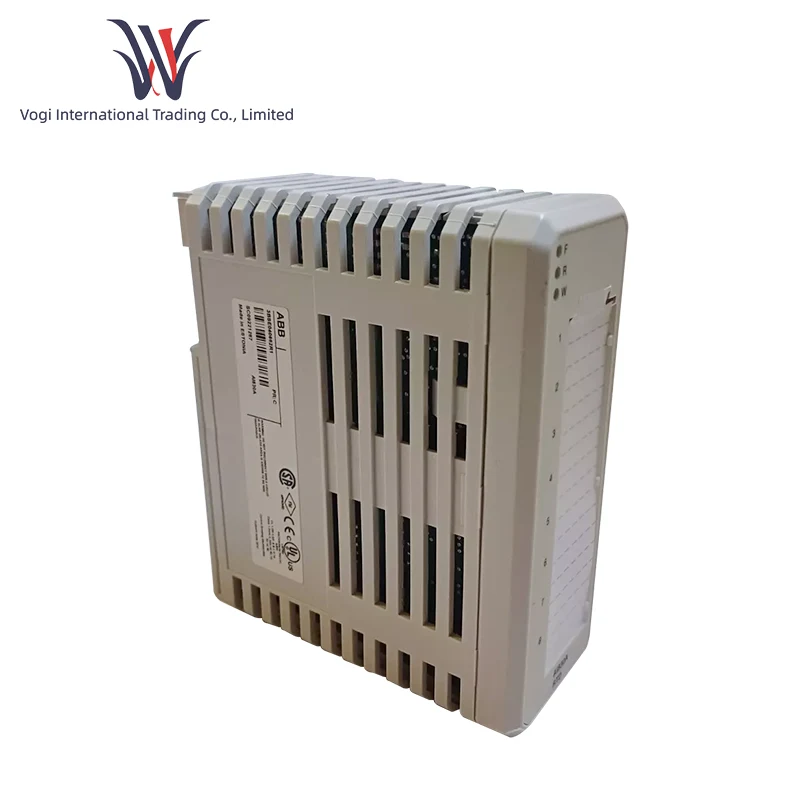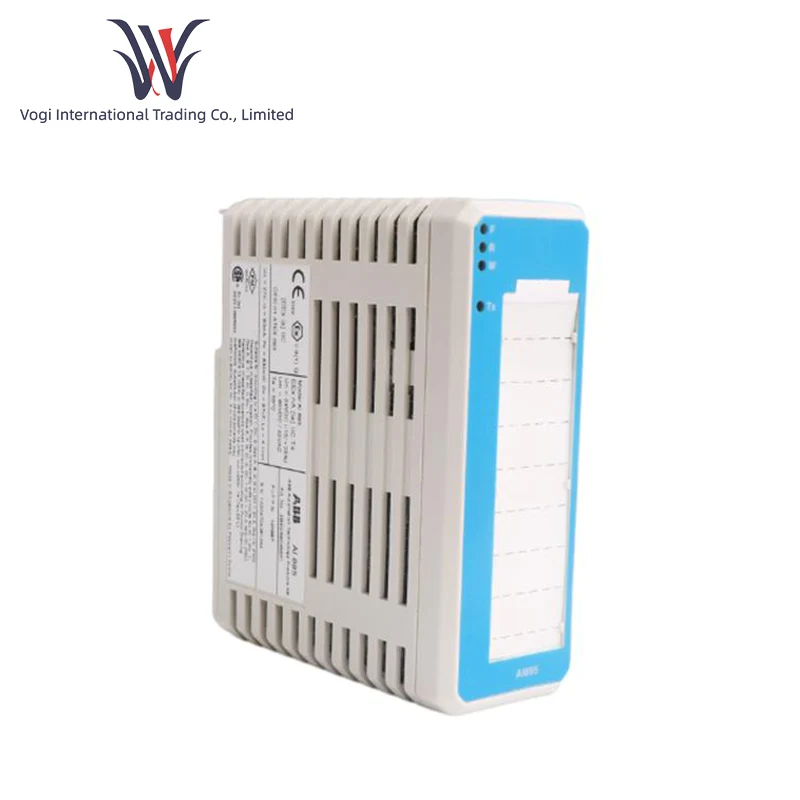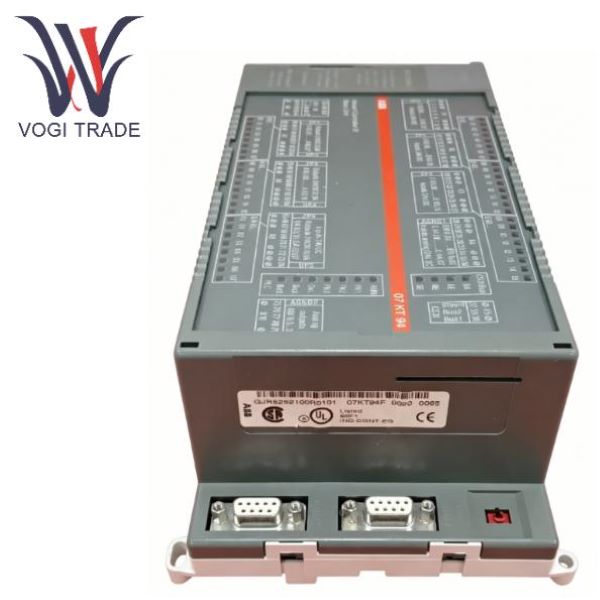
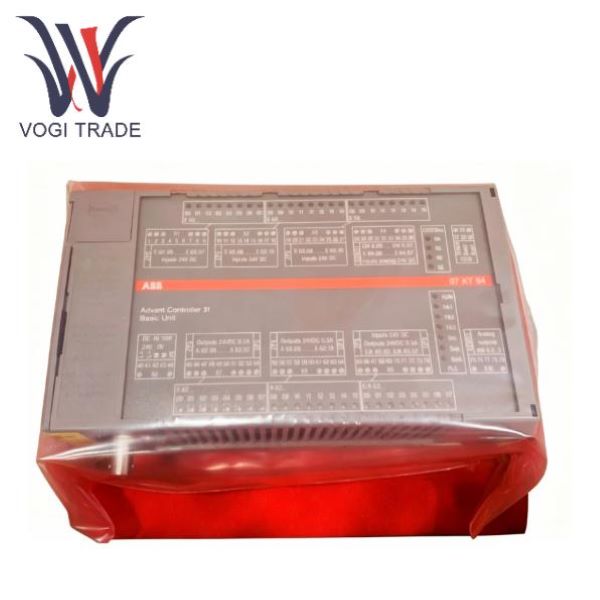
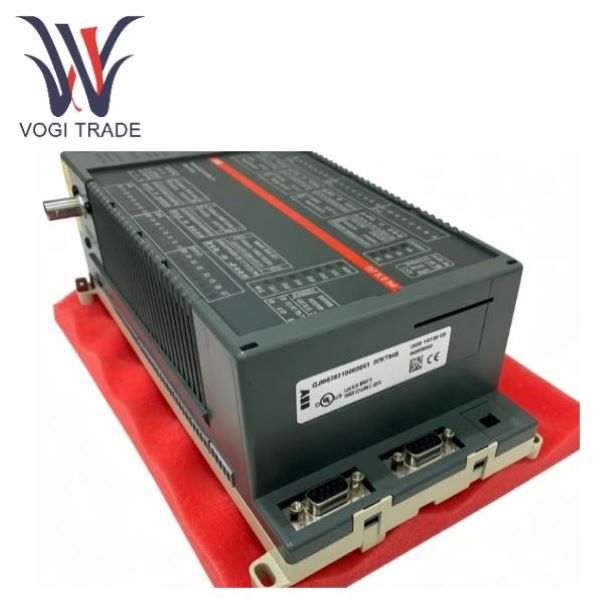
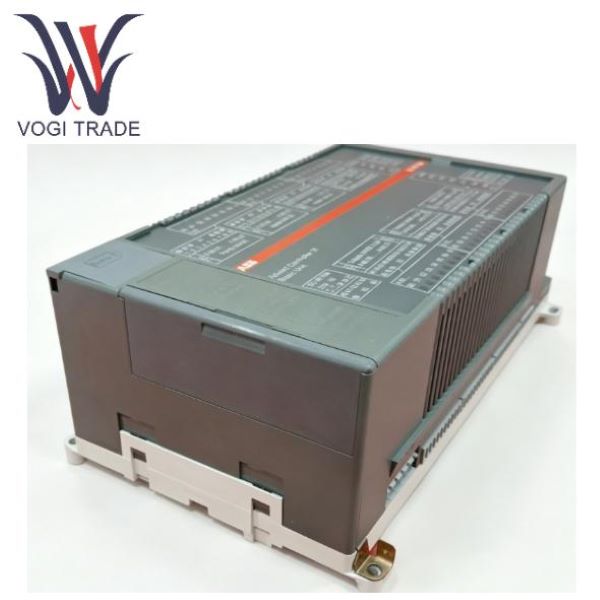
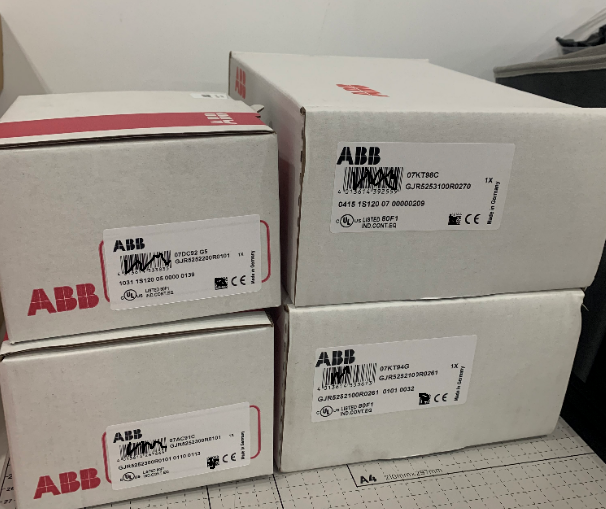
Brand:ABB Description:Safety Prog. Logic Controller Condition:New Certificate:COO TEST REPORT WARRANTY LETTER Warranty:1 year Inventory Qty:6 Payment term:T/T Shipping Port: Xiamen 07KT94 GJR5252100R3161 as an AC31-S safety PLC, supports the writing of safety-related control programs, featuring safety loop interlocking, fault-safe shutdown, and dual-channel safety signal verification functions. It can handle various safety device logics and meet the safety protection and control requirements of equipment.
07KT94 GJR5252100R3161 is an ABB AC31-S series safety programmable logic controller, which belongs to the distributed automation PLC platform. The device is powered by 24VDC and equipped with 240KB program storage. It integrates 24 digital input channels, 16 digital output channels, 8 counting channels, 8 analog input channels, and 4 analog output channels. The digital channels are uniformly of 24VDC/0.5A specification. The hardware of 07KT94 GJR5252100R3161 is equipped with dual RS232 serial ports and CS31 fieldbus, supporting local programming and remote distributed IO networking. Belonging to the AC31-40/50 product line and classified as small industrial equipment (WEEE Category 5), it is targeted at safety-oriented equipment automation scenarios. 07KT94 GJR5252100R3161 supports installation in standard industrial control cabinets and has complete digital, analog, and high-speed counting integrated acquisition and control capabilities.
|
Manufacture |
ABB |
|
Model Number: |
07KT94 |
|
Ordering Number |
GJR5252100R3161 |
|
Catalog |
Distributed Automation PLCs |
|
Country Of Origin |
Sweden/Menden/Germany |
|
HS CODE: |
85371091 |
|
Dimension |
8.5 cm x 23 cm x 14cm |
|
Battery |
Does not contain a built-in battery. |
|
Weight |
1.5kg |
Product Function
1. Safety Logic Control and Processing
As an AC31-S safety PLC, the 07KT94 GJR5252100R3161 supports the development of safety-related control programs in compliance with IEC 61131-3 standards. It features safety loop interlocking, fail-safe shutdown, and dual-channel safety signal verification. It processes logic for safety devices such as emergency stops, safety gates, and light curtains, meeting requirements for equipment safety protection and control.
2. Integrated Multi-Channel I/O Acquisition and Output
It features high-capacity integrated I/O: 24 DI channels for acquiring discrete signals (buttons, limit switches, safety switches); 16 DO transistor outputs (0.5A per channel) for driving solenoid valves and contactors; 8 DC high-speed counting channels for encoder and pulse speed signals; 8 AI channels for transmitters (temperature, pressure, level); and 4 AO channels for standard 4–20mA analog output to regulate devices like control valves and variable frequency drives (VFDs).
3. Multi-Channel Communication and Interaction
The 07KT94 GJR5252100R3161 features dual independent RS232 serial ports. One port is used for local program downloading and online debugging on the computer, while the other can be connected to touch screens and third-party instruments. Natively equipped with the CS31 distributed fieldbus, it connects remote IO sub-stations in series through twisted-pair cables to achieve multi-point distributed control in the workshop and expand the control range of the system.
4. High-Capacity Program Storage and Subroutine Scheduling
With 240KB of program memory, it supports the storage of complex programs involving sequential control, process regulation, and safety interlocking. Built-in functions include CALL subroutine calls, MCR nested logic, and END debugging breakpoints, supporting segmented program debugging and logic jumps; this allows for the layered programming and management of multi-process control programs for large-scale equipment.
5. Distributed System Networking and Expansion
07KT94 GJR5252100R3161 Relying on the expandable remote I/O module of the CS31 bus, it realizes the networking of local control cabinets and on-site decentralized actuators. A single system can be expanded to thousands of IO points, which is suitable for the distributed automation layout of assembly lines and complete sets of equipment.
Reasons for choosing this product
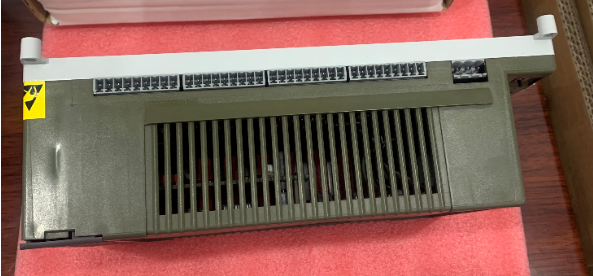
1. The integrated safety design eliminates the need for additional safety relays. It belongs to the AC31-S safety-specific PLC and comes with built-in safety logic operation capabilities. Ordinary standard PLCS do not have safety certification logic. Using this product can eliminate the need for an external safety relay module, simplify the wiring of the control cabinet, and reduce hardware procurement costs.
2. The all-IO integrated system is preferred for compact devices, with a single unit integrating digital input and output, high-speed counting, and analog quantity acquisition and output. For medium and small-sized devices, there is no need to install additional AI/AO or counting modules. The control cabinet occupies less space, and the efficiency of complete equipment integration is higher.
3. Native CS31 distributed bus, compatible with remote expansion of production lines. It comes with CS31 fieldbus, allowing for remote I/O expansion without the need for additional communication modules. It is suitable for multi-station assembly lines and large-scale complete equipment distributed layout, with wiring costs far lower than point-to-point wiring.
4. The dual RS232 serial ports have clear divisions of labor, with no interference between debugging and interaction. One is dedicated to program download and debugging, while the other is long-term connected to touch screens or upper computers. During equipment debugging, on-site human-computer interaction will not be interrupted, making equipment operation and maintenance more convenient. Large-capacity program memory, suitable for complex multi-process equipment.
5. Compared with the small-capacity CPU of the same series, it can carry large-scale programs with multiple processes, multi-loop PID, and multi-layer safety interlocks, and is suitable for multi-process composite automation equipment.
Instructions for Use
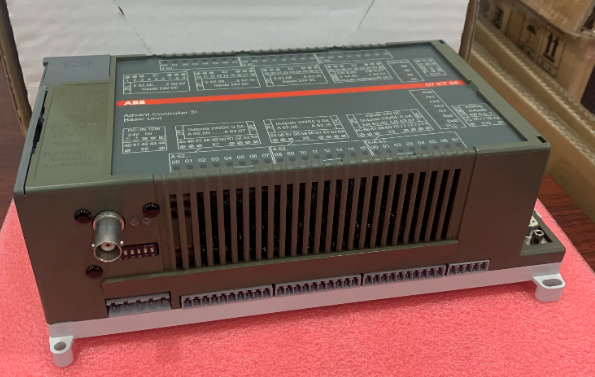
1. Hardware Installation and Wiring
Perform installation with power disconnected; mount the controller securely onto a standard industrial DIN rail or into a cabinet.
Connect a 24V DC power supply, ensuring correct polarity to prevent module damage from reverse connection.
Connect passive or active sensors (such as push-buttons, safety gate switches, or photoelectric switches) to Digital Input (DI) terminals; connect contactors or solenoid valve coils in series with Digital Output (DO) terminals.
Connect 4-20mA temperature or pressure transmitters to Analog Input (AI) terminals; connect proportional valves or variable frequency drive (VFD) analog reference inputs to Analog Output (AO) terminals; connect encoder pulse phases A and B to the DC counting channels.
Communication wiring: Use a dedicated programming cable to connect the RS232 serial port to a computer; daisy-chain remote I/O substations using CS31 bus twisted-pair cables and install terminating resistors at both ends of the bus.
2. Program Configuration and Download
Install the AC31GRAF programming software; write the control program using IEC-standard Ladder Diagram or Function Block languages, ensuring safety interlock program segments are defined separately.
Establish communication between the computer and PLC via the RS232 serial port; read the controller's hardware configuration and match the local channel addresses (24DI/16DO/8AI/4AO).
Develop programs for safety logic, equipment sequence control, PID regulation, and pulse counting; compile the code (ensuring no errors) and download it to the 240KB program memory area.
Online monitoring: Real-time viewing of DI input statuses, AO output values, and pulse count values; debugging of analog signal parameters.
3. Communication Network Configuration
Set the master station address for the CS31 bus and assign a unique station ID to each remote I/O slave station.
Configure the bus communication rate and I/O data refresh cycle; map signals from distributed substations to the local controller's internal registers.
Configure the communication protocol for the RS232 auxiliary serial port to interface with an HMI (touchscreen); set register read/write addresses to enable equipment parameter display and alarm monitoring.
4. On-site Commissioning and Startup
No-load testing: Perform tests without external loads by forcing DO outputs to verify solenoid valve and contactor operation; simulate sensor signals to validate the accuracy of AI and DC counter readings.
Safety circuit testing: Trigger emergency stops and open safety gates to verify that the PLC safety logic immediately cuts off hazardous outputs and confirms the proper functioning of fail-safe features.
Load-bearing trial run: Execute the equipment's full automatic process; optimize PID analog control parameters and pulse positioning parameters; and refine program timing and sequence logic.
Fault reset and maintenance: Clear fault latches via program reset commands following program errors or safety-triggered shutdowns; troubleshoot logic faults using END breakpoints and subroutine segmentation.
5. Routine Maintenance
Periodically inspect power supply voltage and communication cable connectors; back up the program before making any modifications; and save the program during extended power-off periods (no backup battery maintenance required).
Recommended Products
I. AC31-S Safety CPU Series (Same-architecture replacement / Capacity expansion)
07KT93-S: Small-capacity safety CPU; features reduced program memory and a streamlined I/O count; suitable for simple, small-scale standalone safety control applications; lower budget requirement.
07KT94C-S (GJR5252100R2261): Upgraded version of the 07KT94-S; offers improved hardware processing performance while maintaining compatibility with existing I/O and bus interfaces; recommended for new projects or as a replacement model.
07KT95-S: High-end AC31-S safety CPU; features larger program memory and a higher limit for expanded I/O points; suitable for large-scale safety systems involving multi-device coordination.
II. AC31 Series Standard Non-Safety CPUs (For applications without safety requirements)
07KT51: Standard CPU from the AC31 50 series; lacks safety logic and is designed solely for general automation control; lower cost; suitable for applications where equipment safety interlocking is not required.
07KR51: Standard CPU with relay outputs; suitable for low-power switching loads and applications that do not require transistor outputs.
III. Compatible Expansion Modules and Accessories
CS31 Remote I/O Modules (DDI/DDO/DCA series): Designed for use with the CS31 bus to expand remote digital and analog I/O points.
AC31 Programming Cable 07SK50: Dedicated RS232 debugging cable for program uploading and downloading.
7AC91D Safety Relay Module: Complements safety circuit reinforcement; used in conjunction with the CPU for high-safety-level equipment applications.