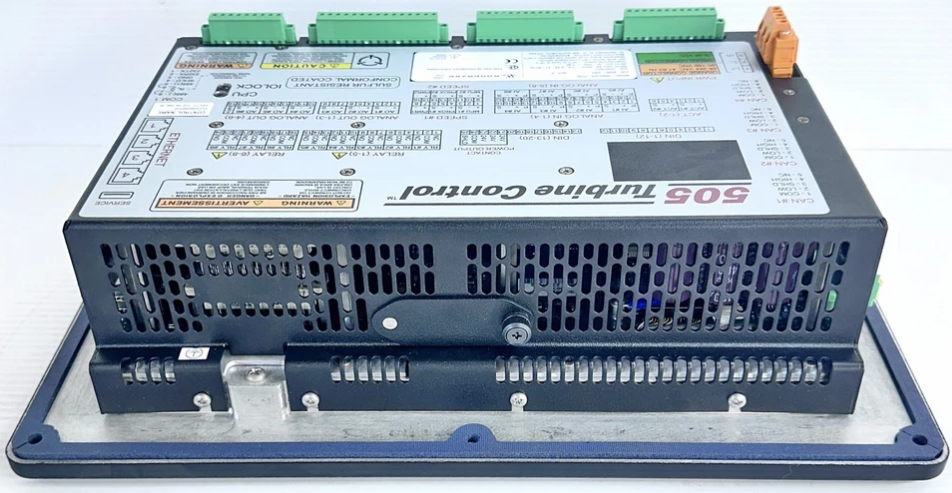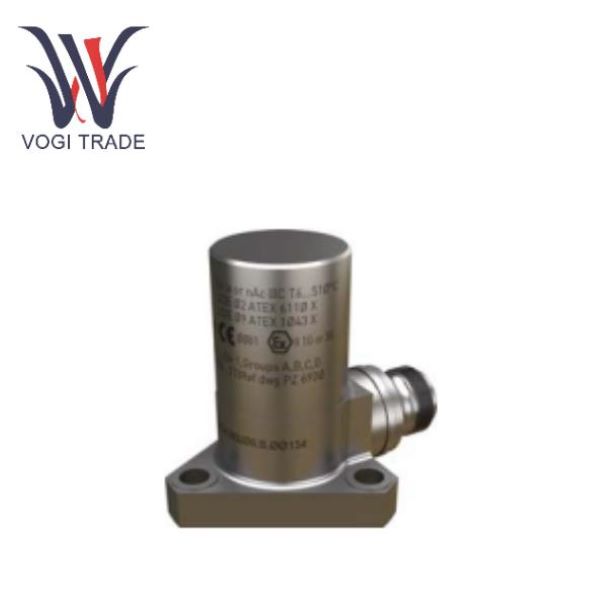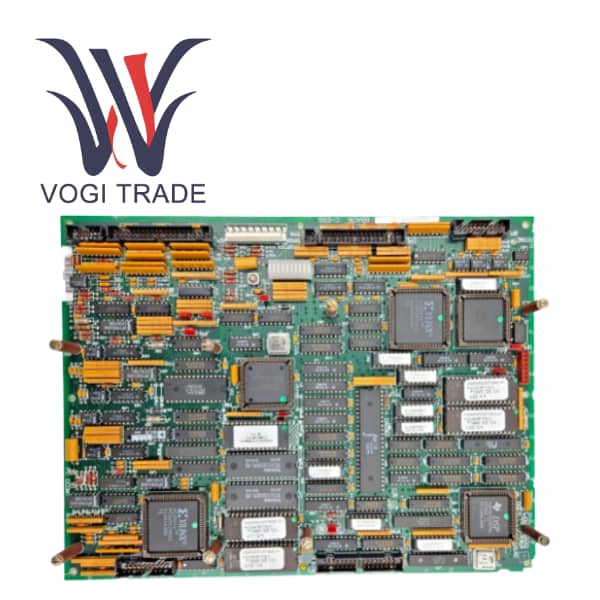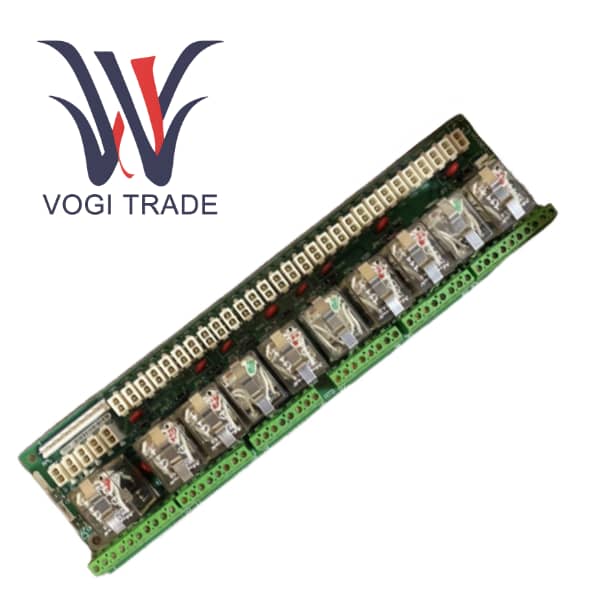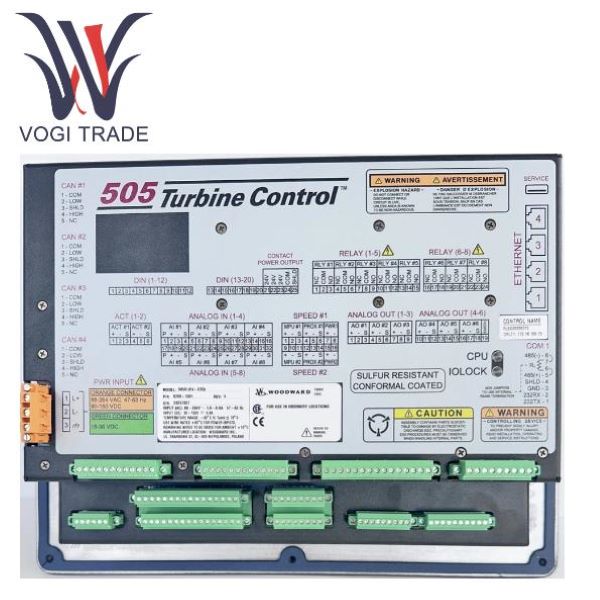
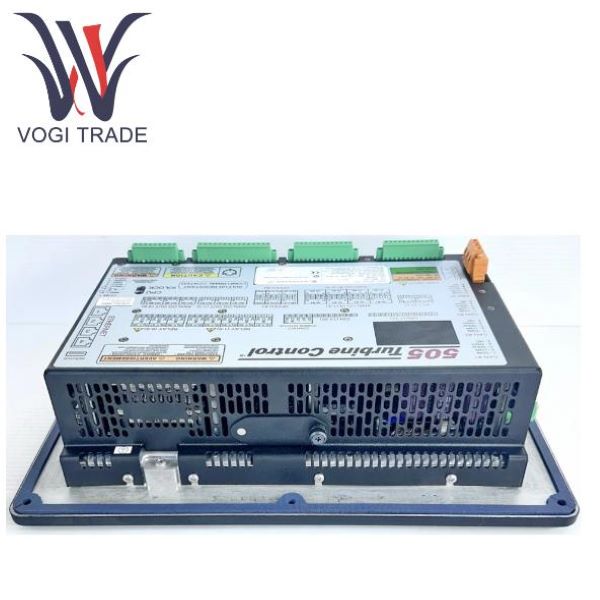
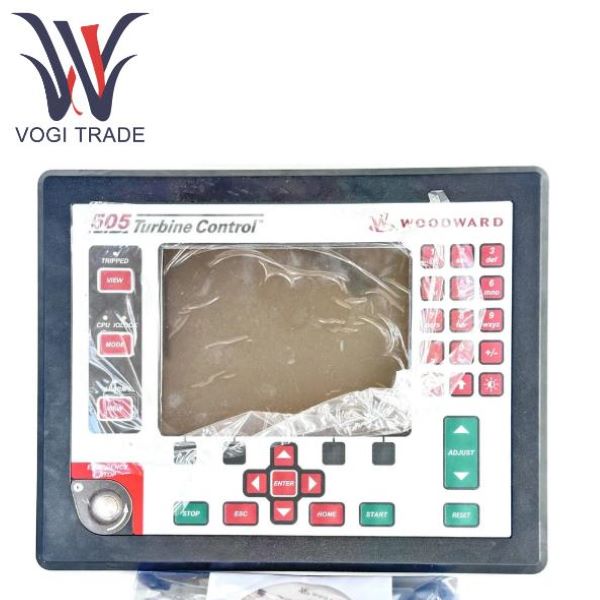
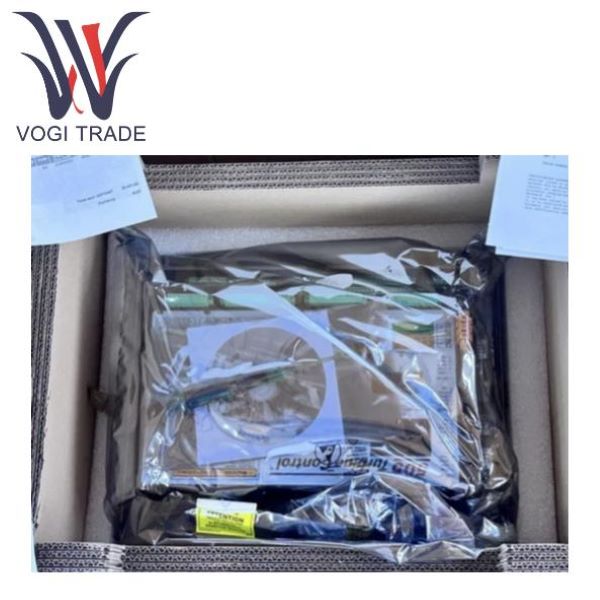
Brand: Woodward Description: STEAM TURBINE CONTROL Condition: Brand New Certificate:COO Warranty: 1 year Inventory Qty: 3 Payment Term: T/T Shipping Port: Xiamen The 8200-1312 is a Woodward 505 series XT digital steam turbine controller from the United States. It features a low-pressure ATX architecture.
The 8200-1312 is a Woodward 505 series XT digital steam turbine controller from the United States. It features a low-pressure ATX architecture and is suitable for scenarios such as power generation, driving feed water pumps, compressors, and auxiliary engines for ship steam turbines. It replaces traditional analog governors and enables full-process automatic digital control of steam turbines
|
Manufacture |
Woodward |
|
Model Number |
8200-1312 |
|
Ordering Number |
8200-1312 |
|
Catalog |
505XT |
|
Country Of Origin |
American |
|
HS CODE |
85389091 |
|
Dimension |
26.3cm*14.5cm*12cm |
|
Rated power consumption |
≤35W |
|
Weight |
4.2kg |
Product Advantages
505XT Series Advantages
1. Precision Multivariable Control: The only compact steam turbine controller supporting coordinated control of steam extraction and induction, ideal for CHP (Combined Heat and Power) units;
2. Field-Programmable: Engineers can modify control logic on-site without returning the unit to the factory, allowing adaptation to various turbine specifications;
3. All-in-One Integration: Built-in speed sensing, PID processing, logic relays, and operator interface—eliminating the need for additional expansion PLCs;
4. Highly Reliable Digital Architecture: Features hardware self-diagnostics that monitor I/O, relays, and speed-sensing circuits in real-time, providing early warning of faults;
5. High Compatibility: Supports standard 4–20mA analog signals and passive switch contacts, making it compatible with all mainstream electro-hydraulic servo actuators;
6. Comprehensive Safety Protection: Includes multiple trip protections—such as overspeed, thermal stress, low oil pressure, and abnormal valve position—meeting power plant safety standards.
8200-1312 Unique Advantages
1. Dual Marine Class Certifications: Certified by LR (Lloyd's Register) and DNV-GL, allowing for direct installation in ship engine rooms for marine steam turbine applications;
2. High Vibration Resistance (RV1 Rating): Withstands the intense vibration environments of engine rooms and outdoor skid-mounted equipment, ensuring stable operation across a wide frequency range (10–2000 Hz);
3. Versatile Application: A single model meets the requirements for both onshore industrial and offshore marine operating conditions, simplifying project stocking and model selection;
4. Ruggedized Hardware: Relays and circuit boards are reinforced against salt spray and moisture, ensuring suitability for high-humidity and corrosive marine environments.
Working Principle
8200-1312 A closed-loop control is formed from the signal acquisition unit → microprocessor operation unit → relay output drive → electro-hydraulic actuator → feedback sensor
Signal Acquisition
Speed signal: Steam turbine magnetoresistive speed probe for real-time acquisition of rotor speed pulses;
Analog signals: Steam pressure, generator power, oil temperature, and valve position (LVDT feedback 4–20mA signals);
Discrete signals: Oil pressure, trip valve status, remote start/stop commands, and grid synchronization signals;
Core Processing
505XT built-in PID multivariable decoupling algorithm;
Controller features an integrated 32-bit microprocessor that automatically switches control loops based on the operating mode:
Startup phase: Speed-priority control; automatically executes rotor rolling, warming, and critical speed avoidance based on set ramp rates;
Grid-connected generation: Load PID control dominates, with speed fine-tuning to maintain grid frequency;
Extraction heating mode: Dual-PID decoupling; simultaneous regulation of the main steam valve and extraction valve to balance power generation and heating steam pressure;
Relay Output & Drive
Internal relays output discrete signals:
Continuous control: 4–20mA output drives the electro-hydraulic servo valve to control steam valve opening;
Logic output: Trip relays, alarm relays, and remote status contacts;
Closed-loop Feedback Correction
Real-time feedback of LVDT valve position, speed, and pressure to the controller allows for real-time correction of output commands, eliminating steady-state control error;
Safety Protection Logic
Overspeed trip triggered when speed exceeds 110% of rated speed; relays cut off servo valve oil supply, the main steam valve closes rapidly, and fault information is recorded.
Instructions for Use
Initial Configuration
1. Configure parameters via the panel keypad or PC-based RemoteView software based on turbine specifications: rated speed, ramp-up rate, extraction steam pressure setpoint, overspeed protection threshold, and PID parameters;
2. Select operating mode: pure speed control, generator load control, or combined extraction control;
3. Configure I/O terminal assignments: speed probes, servo valves, trip protection, and remote start/stop communication.
On-site Operational Workflow
1. Local manual mode: Manually adjust valve position via the controller panel for low-speed turbine commissioning and valve calibration;
2. Automatic start mode: Issue a remote start command; the controller automatically executes the sequence: rotor roll-off → warm-up → speed ramp-up → synchronization/grid connection;
3. Normal operation regulation
Grid-connected units: Set target load; the controller automatically adjusts steam intake to stabilize power output;
Extraction units: Set heating steam pressure; the system automatically balances power generation and steam extraction;
4. Fault handling and shutdown
Normal shutdown: Issue a manual or remote shutdown command; the controller gradually closes steam valves to reduce speed;
Protection trip: Triggered by faults such as overspeed or low oil pressure; relays actuate to immediately trip the turbine, and the panel displays the primary fault;
5. Remote monitoring: Supports communication protocols such as Modbus; integrates with DCS or marine engine room monitoring systems to allow remote setpoint adjustment and operational data viewing.