

Abstract · This article provides a detailed technical examination of the ABB PM633 processor module, exploring its architectural design, processing capabilities, and critical role in industrial automation control systems. The discussion covers hardware specifications, communication interfaces, memory architecture, and application domains, drawing on manufacturer documentation and field experience to present a comprehensive technical overview.
01. Architectural Overview and Core Processing Unit
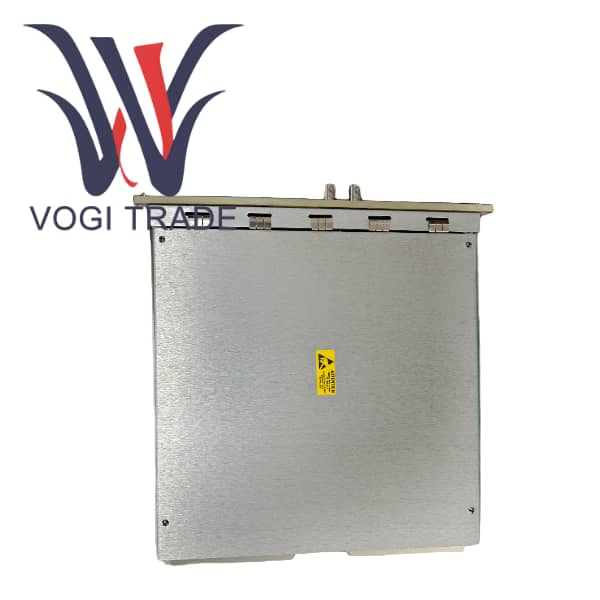
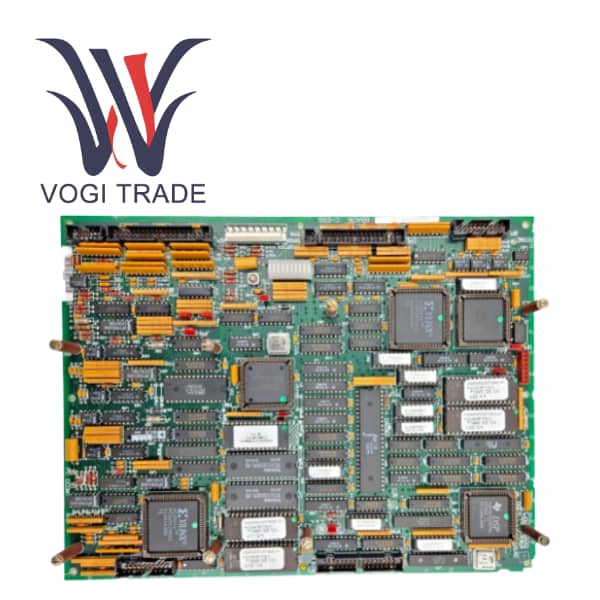
The ABB PM633 is a central processing unit module designed for industrial automation and control applications. It belongs to ABB's Advant OCS (Open Control System) family and serves as a core component within the AC 800M controller series, providing the computational power necessary for executing complex control logic, managing data flow, and coordinating system operations [citation:1][citation:12].
At the heart of the PM633 is a 32-bit microprocessor based on the MC68340 architecture, operating at a clock speed of 25 MHz [citation:1][citation:2]. This processor delivers reliable performance for a wide range of industrial control tasks, from discrete manufacturing to process control. The module's architecture is optimized for real-time operations, ensuring deterministic execution of control programs and rapid response to input signals. The processor unit is designed to handle multi-tasking environments, allowing simultaneous execution of control algorithms, communication protocols, and diagnostic functions without performance degradation.
32-bit MC68340
25 MHz
ABB Advant OCS / AC 800M
02. Memory Architecture and Program Storage
40K bytes of user-programmable memory for control logic storage
10K bytes of data memory for variables and runtime information
Backup battery (4943013-3) preserves data during power interruptions
1024 KB of RAM for system operation and program execution
The memory architecture of the PM633 is tailored to meet the demands of industrial control applications. The module includes 40K bytes of user program memory, sufficient for storing complex control algorithms and logic sequences [citation:11][citation:20]. An additional 10K bytes of data memory supports runtime variables, intermediate calculations, and process data. The system RAM of 1024 KB provides the working memory necessary for efficient program execution [citation:2]. A backup battery ensures that critical data and program configurations are retained even during power outages, preventing data loss and enabling smooth system restart [citation:5][citation:11].
03. Communication Interfaces and Network Integration
The ABB PM633 is equipped with a comprehensive set of communication interfaces that enable integration into diverse industrial networks and systems. These interfaces facilitate data exchange with supervisory systems, field devices, and other controllers.
- Serial Communication: Two serial ports (RS-232 and RS-485) provide connectivity to legacy devices, programming tools, and peripheral equipment [citation:11][citation:12].
- Parallel Port: A parallel interface is available for specific applications requiring parallel data transfer [citation:11].
- Fieldbus Support: The module supports communication protocols including Modbus and Profibus DP, enabling seamless integration with industrial networks and third-party equipment [citation:12][citation:20].
- Ethernet Connectivity: Certain configurations and associated system components support Ethernet communication, facilitating connection to SCADA systems and enterprise networks [citation:12].
- Real-Time Clock: An integrated real-time clock supports time-stamped data logging and scheduled operations [citation:11].
Integration Note: The combination of serial, fieldbus, and network interfaces allows the PM633 to function as a central hub for data collection and control coordination within a distributed automation system. This flexibility reduces the need for additional communication gateways and simplifies system architecture.
04. I/O Connectivity and System Expansion
The PM633 is designed for scalability and system expansion. It supports connection to a wide range of I/O modules, allowing the system to be tailored to specific application requirements. This modular approach enables users to start with a minimal configuration and expand as needs grow.
- Local I/O: The module can interface directly with local I/O modules mounted on the same rack or backplane, providing rapid access to sensor and actuator signals.
- Remote I/O: Support for remote I/O stations via fieldbus communication allows the placement of I/O modules close to the field devices, reducing wiring costs and improving signal integrity.
- Redundancy Support: The PM633 can be configured in redundant (hot-standby) arrangements, where two identical modules operate in parallel. If the primary module fails, the backup takes over seamlessly, ensuring uninterrupted control [citation:10].
- Communication Modules: Additional communication modules can be added to support specific protocols or to connect to different network segments, enhancing system connectivity.
This expandability ensures that the control system can adapt to evolving operational requirements without requiring complete replacement of the core processing unit. The modular design also simplifies maintenance and upgrades, as individual modules can be replaced or added without disrupting the entire system.
05. Environmental Specifications and Reliability
The ABB PM633 is engineered to operate reliably in demanding industrial environments. Its construction and component selection reflect a design philosophy centered on durability and long-term performance.
| Parameter | Specification | Significance |
|---|---|---|
| Operating Temperature | -20°C to +60°C | Suitable for most industrial environments |
| Storage Temperature | -40°C to +85°C | Safe storage and transport |
| Power Supply | 24 VDC | Standard industrial control voltage |
| Power Consumption | < 10 W | Energy efficient, low heat generation |
| Protection Rating | IP20 | Protected against solid objects; requires cabinet mounting |
| Dimensions | 238.5 × 310.5 × 38.7 mm | Compact footprint for space-constrained cabinets |
| Weight | 0.34 kg to 1.4 kg | Lightweight for ease of installation |
Based on specifications from multiple sources [citation:3][citation:11][citation:16].
The module's wide operating temperature range ensures functionality in environments ranging from climate-controlled control rooms to harsh plant floor conditions. The low power consumption reduces thermal load within enclosures, contributing to overall system reliability. The IP20 rating indicates protection against solid objects larger than 12.5mm, making the module suitable for installation in standard electrical cabinets.
06. Application Domains and Industry Use Cases
The ABB PM633 finds application across a broad spectrum of industries, serving as a reliable processing core for diverse control tasks. Its combination of processing capability, communication flexibility, and rugged construction makes it suitable for both discrete and process manufacturing environments.
- Process Control: Used in chemical, pharmaceutical, and food processing plants to regulate temperature, pressure, flow, and other process variables [citation:4][citation:12].
- Manufacturing Automation: Controls motors, pumps, conveyors, and robotic systems in automotive, electronics, and general manufacturing [citation:3][citation:10].
- Power Generation and Distribution: Monitors and controls equipment in power plants, substations, and renewable energy installations [citation:10].
- Building Automation: Manages HVAC, lighting, and security systems in commercial and institutional buildings [citation:12].
- Water and Wastewater Treatment: Controls pump stations, monitoring systems, and treatment processes [citation:10].
- Transportation Infrastructure: Used in signaling systems, tunnel ventilation, and traffic management [citation:12].
The module's ability to handle both fast discrete logic and complex analog control loops makes it versatile enough for hybrid applications where both types of control are required. Its communication capabilities enable integration into plant-wide automation architectures, facilitating data exchange between the control level and enterprise systems.
Frequently Asked Questions
Technical specifications and compatibility may vary. Always consult the manufacturer's documentation for your specific application requirements.