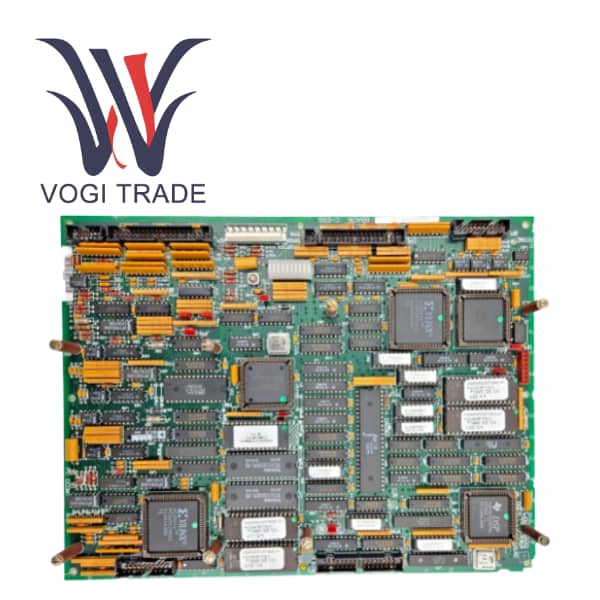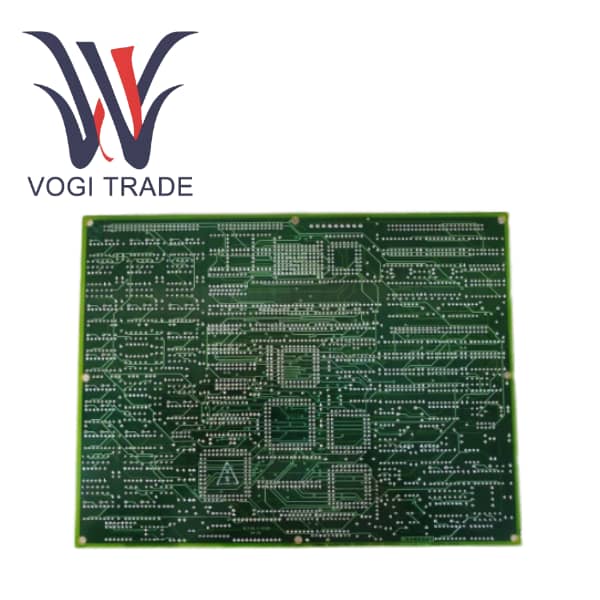
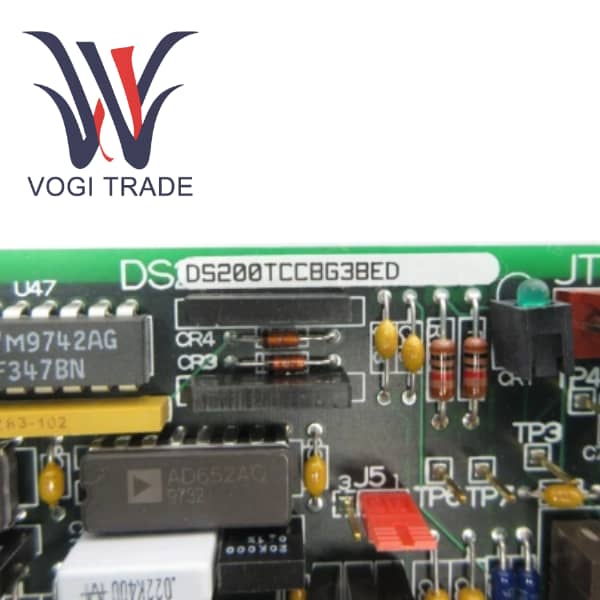
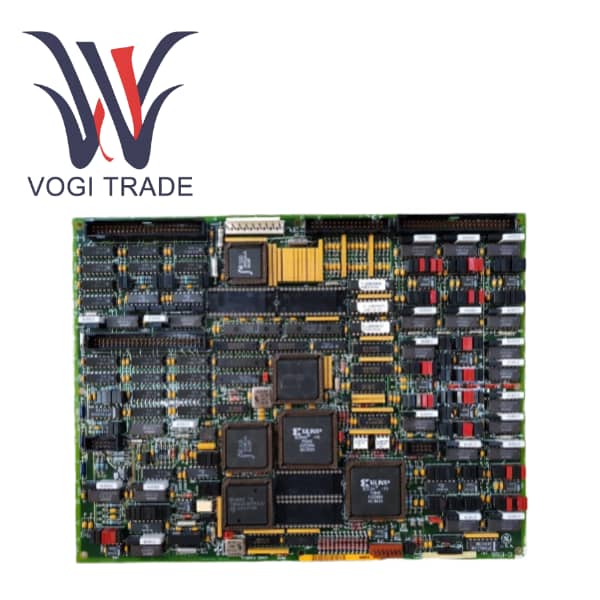
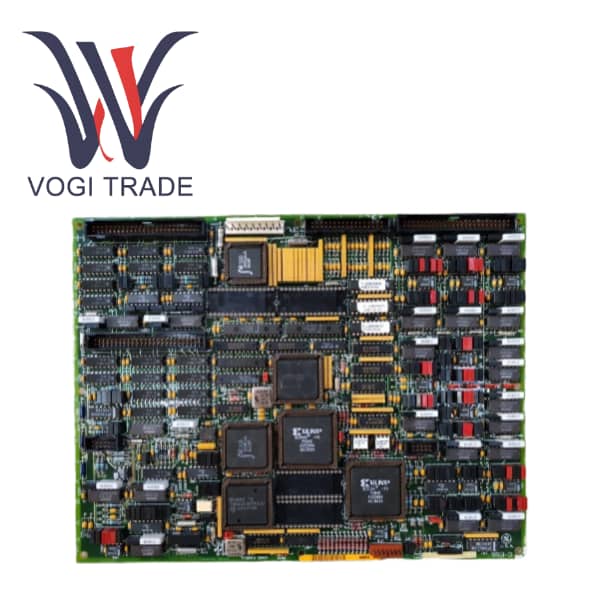
Brand: GE Description: Extended Analog IO Board Condition: Brand New Certificate:COO TEST REPORT WARRANTY LETTER Warranty: 1 year Inventory Qty: 3 Payment Term: T/T Shipping Port: Xiamen The DS200TCCBG3BED is a Common Extended Analog I/O Board (TCCB) designed for the GE Speedtronic Mark V LM Gas Turbine Control System.
|
Manufacture |
GE |
|
Model Number |
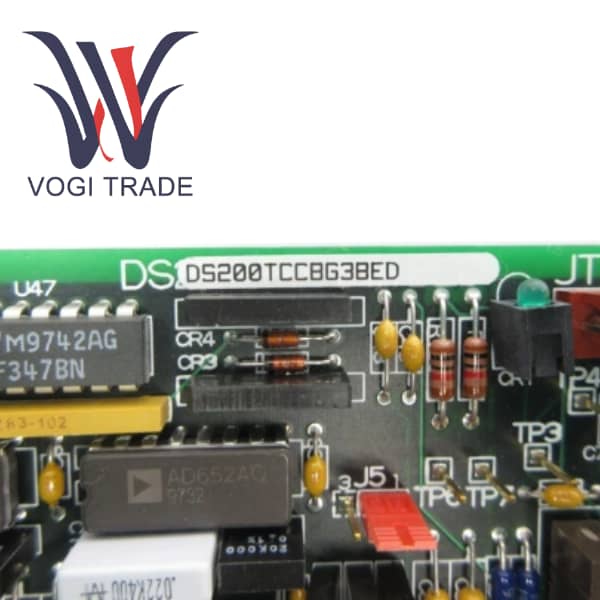
DS200TCCBG3BED |
|
Ordering Number |
DS200TCCBG3BED |
|
Catalog |
- |
|
Country Of Origin |
USA |
|
HS CODE |
85389091 |
|
Dimension |
21.2cm*15cm*3.5cm |
|
Packing Dimension |
24cm*18cm*6cm |
|
Weight |
0.4kg |
Product Overview
The DS200TCCBG3BED is a universal extended analog I/O board (TCCB), specifically designed for the GE Speedtronic Mark V LM gas turbine control system. As a core component of I/O, the TCCBG can serve as an expansion unit to scale, adjust and process various critical analog signals that the main general-purpose Analog I/O board (TCCA) cannot handle. The main function of DS200TCCBG3B is to connect high-value power system signals, such as generator/bus voltage and line current, as well as other RTD and mA inputs. Therefore, it is crucial for comprehensive gas turbine monitoring and control.
The suffix "G3BED" indicates a specific hardware version or model, ensuring its compatibility and high performance in the specified Mark VLM system configuration. The DS200TCCBG3BED serves as a data acquisition center, converting the raw signals from field instruments into precise digital data for use by the system's I/O engine and control engine.
Product Features
This board provides dedicated circuits for processing 4-20mA and 0-1mA analog input signals and can perform multi-range milliampere input processing.
These signals are read from the TBCB terminal board, the current is converted into a voltage drop across the load resistor, and the signals are processed so that the I/O engine can perform digital reading.
The RTD temperature monitoring provides excitation current for the RTD connected through the TBCB terminal board. Precise temperature measurement of key components is achieved by precisely measuring the voltage changes caused by resistance variations.
Generator and bus voltage monitoring involves the TCCB board scaling and processing high-voltage signals from voltage transformers (PTS), which are used to monitor generator and bus voltages. This is crucial for synchronization and power management.
Process the signals from the current transformer (CT) to monitor the line current. Combining voltage data, the system is capable of calculating real-time power indicators.
The computing system uses processed PT and CT signals to determine phase relationships and calculate key power system parameters, including: generator power (megawatts), power factor (PF), reactive power (VAR)
The functions of the GE DS200TCCBG3BED are mainly defined by hardware jumpers, which are used to set the parameters of the voltage and current monitoring range, thus eliminating the need to rely on software to achieve these critical safety and control functions.
Comparison with Similar Products
Within the Mark V LM <RS> core, the TCCB board works alongside the TCCA board. A comparison clarifies their distinct roles:
|
Feature |
DS200TCCBG3BED (TCCB - Extended Analog) |
DS200TCCA (TCCA - Common Analog) |
|
Primary Function |
Expanded & High-Value Analog I/O |
General Purpose Analog I/O |
|
Signal Focus |
Generator/Bus Voltages (PT), Line Currents (CT), Extended mA/RTD inputs. |
General 4-20 mA I/O, RTDs, Thermocouples, Shaft Voltage/Current. |
|
Key Differentiator |
Power System Monitoring (MW, PF, VAR calculation). |
Turbine Process Monitoring (Temperatures, Pressures, Positions). |
|
Source of Signals |
TBCB terminal board and TCEB board in the <P1> core. |
CTBA, TBQA, and TBCA terminal boards in the <RS> core. |
|
Criticality |
Critical for synchronization, load control, and grid interaction. |
Critical for turbine thermal, mechanical, and operational control. |
Applicable Industry Scope
The DS200TCCBG3BED is exclusively designed for heavy-duty industrial applications involving GE gas and steam turbines, including:
Power generation
Gas turbine power plants are used to precisely monitor the output power of generators and synchronize it with the power grid.
Steam turbine power plants are used for load control and protection.
As a key component for the coordinated control of gas turbines and steam turbines in combined cycle power plants, it can optimize the overall efficiency of the power plant and ensure grid compliance.
In the oil and gas industry, turbine-driven compressors and pumping stations used on pipelines, in these applications, monitoring the power of electric drive is crucial for process stability and protection.