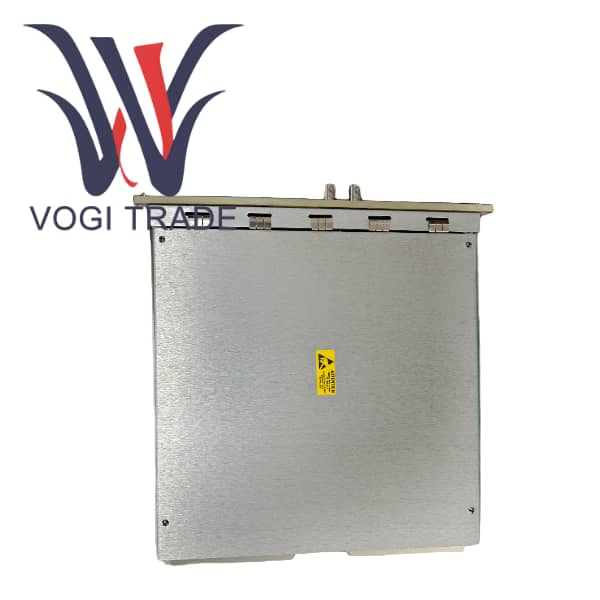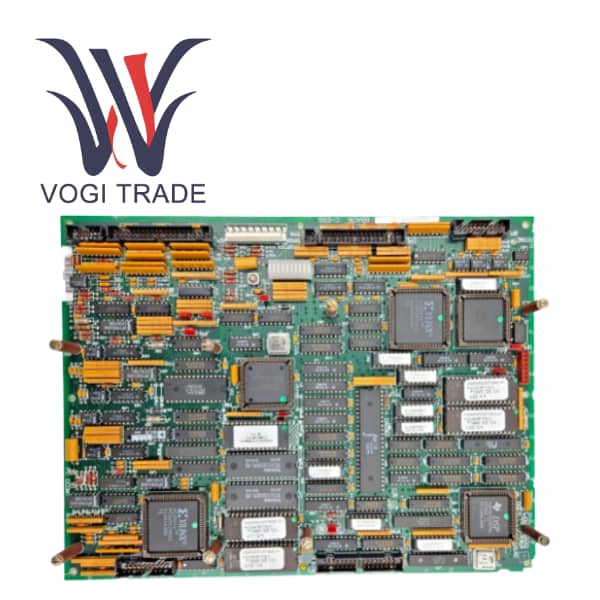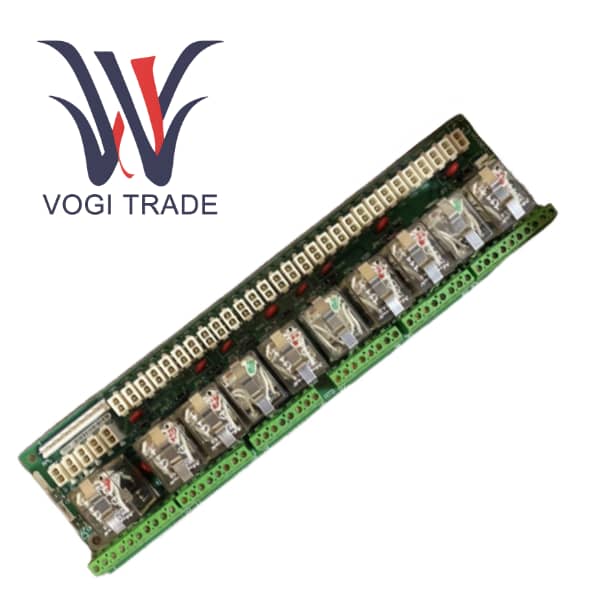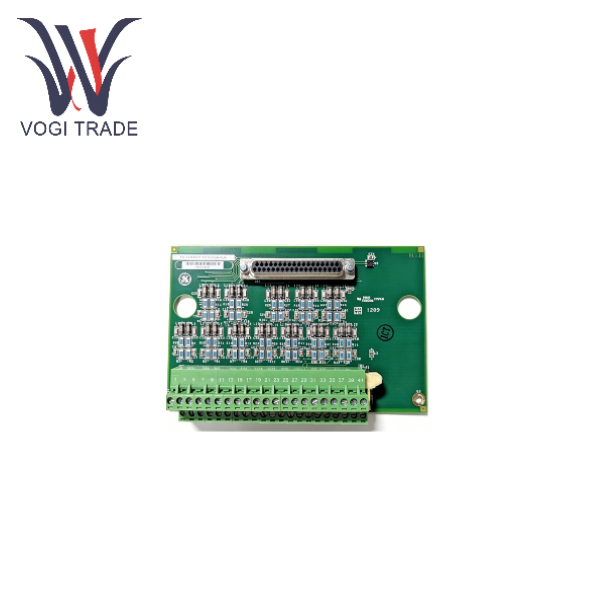
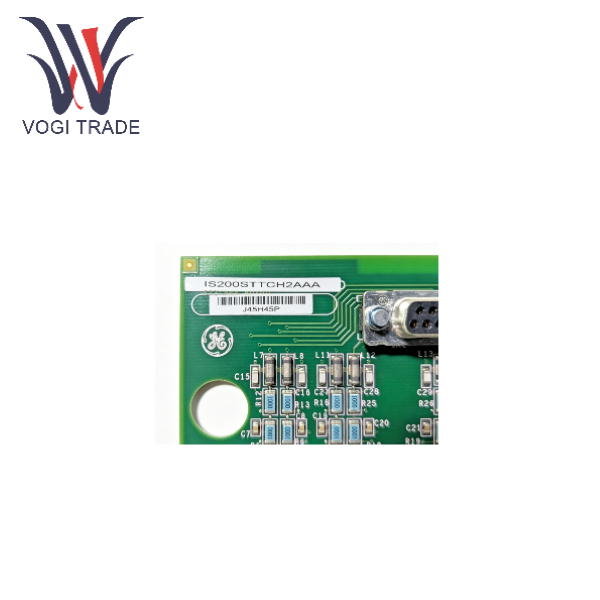
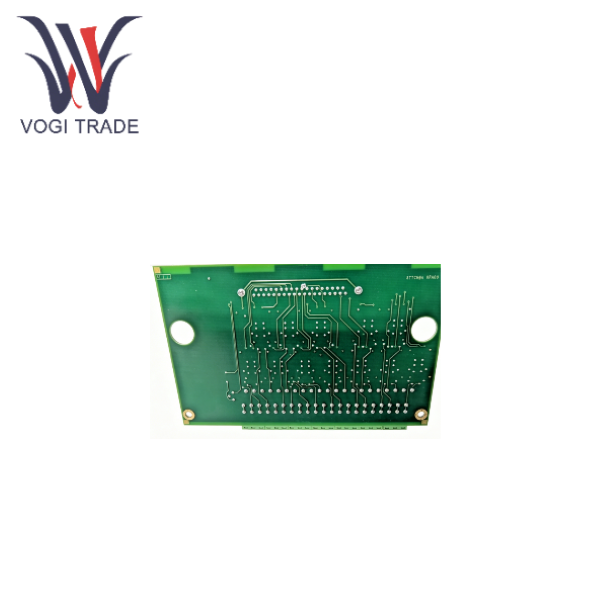
Brand: GE Description: IS200STTCH2AAA Condition: Brand New Certificate: COO TEST REPORT WARRANTY LETTER Warranty: 1 year Inventory Qty: 3 Payment Term: T/T Shipping Port: Xiamen The IS200STTCH2AAA is a core component in the General Electric Mark VIe series control system and is essentially a highly reliable TMR terminal board. As a key bridge between the control I/O module and the field equipment, it mainly undertakes the tasks of signal distribution, isolation and conditioning, providing an extremely stable wiring interface for the system.
|
Manufacture |
GE |
|
Model Number |
IS200STTCH2AAA |
|
Ordering Number |
IS200STTCH2AAA |
|
Catalog |
Mark VIE |
|
Country Of Origin |
USA |
|
HS CODE |
7326909000 |
|
Dimension |
178 × 330 × 160 mm |
|
Weight |
0.8 kg |
Product Overview
GE IS200STTCH1AAA is a simplex thermocouple input terminal board designed by General Electric for its Mark VIe gas/steam turbine control system. In the Mark VIe distributed control system architecture, IS200STTCH1AAA belongs to the hardware component at the basic I/O level. The core responsibility is to serve as a physical interface bridge between on-site thermocouple temperature sensors (such as K-type, J-type, E-type, etc.) and control system processors, such as PCAA or TMR controllers. Unlike TBTC terminal boards that support triple module redundancy, STTC is specifically designed for single-channel or non-redundant control loops and is typically used in auxiliary monitoring points with relatively low reliability requirements or in cost-sensitive simple control systems.
Product Features
Single-channel architecture (Simplex)
The design core of IS200STTCH2AAA STTC is single-channel data acquisition. It does not support the three-channel signal voting mechanism required by the TMR system, but directly transmits the collected temperature signals to a single processor for processing.
Cold end compensation technology
Thermocouple measurement requires a reference end (cold end) temperature. The STTC on-board high-precision temperature sensor is used to monitor the ambient temperature at the terminal blocks in real time and transmit the data to the processor for mathematical compensation to ensure the accuracy of temperature measurement.
Open-circuit detection and fault safety
The on-board circuit provides a tiny bias current. When a Thermocouple breaks, the circuit detects an abnormal voltage. The processor will trigger an alarm (such as "Thermocouple Unhealthy") and set the output to a fail-safe state (usually a full-range negative value or a specific alarm value) to prevent the control system from misjudging.
Anti-interference design
Terminal boards typically feature filter circuits to suppress on-site electromagnetic interference (EMI) and radio frequency interference (RFI), ensuring that weak thermocouple millivolt-level signals (mV) can be accurately read. Electronic ID recognition: On-board electronic nameplate (ID Chip). When powered on, the processor will automatically read this ID to confirm the hardware version, serial number and connection status, preventing hardware configuration errors.
Comparison with similar products
Comparison of the same type of products in the GE Mark VIe system, the products that have similar functions to IS200STTCH2AAA (STTC) but different application scenarios mainly include
TBTC (TMR Thermocouple Input Terminal Board) Differences, TBTC is designed for TMR (Triple Module Redundancy) systems. It has three sets of terminal blocks (JR, JS, JT), which are respectively connected to three independent I/O processors. The system enhances security by performing "median selection" or "voting" on the three signals. Application scenarios: It is used in critical protection circuits such as temperature monitoring of gas turbine combustion chambers (TTXSP1-9, etc.).
PTCC (Thermocouple Input Pack) , Difference: PTCC usually refers to a complete I/O module (Pack) that includes the processor and terminal Board, while STTC usually only refers to the terminal board part (Board). Application scenario: PTCC is an independent I/O site, while STTC must rely on main cards such as PCAA to operate.
Summary, STTC is suitable for non-critical and auxiliary temperature monitoring (such as bearing return oil temperature, auxiliary steam temperature, etc.), while TBTC is suitable for core combustion monitoring
Installation Guide
Note: Please operate in a power-off or anti-static environment.
Preparations
Confirm that the temperature and humidity inside the control cabinet meet the requirements, ranging from -30°C to 65°C.
Check whether there is any physical damage to the appearance of the STTC terminal board.
Mechanical installation
DIN rail installation: IS200STTCH2AAA is typically designed to be clamped onto a standard 35mm DIN rail. Insert the upper clip of the board card into the guide rail, and press down the lower part of the board card. When you hear a "click", it indicates that it is locked.
Screw fixation: Some versions may require the use of M3 screws to be fixed on the back plate through the on-board holes.
Electrical connection:
Signal wiring: Use shielded twisted-pair wires to connect the thermocouple. Pay attention to the positive and negative poles. Usually, red indicates negative, but the specific polarity of the thermocouple should be referred to. The stripping length should comply with Euroblock requirements, approximately 6-8mm.
Shielding grounding: Connect the shielding layer to the adjacent JGPA grounding terminal block to ensure single-ended grounding to avoid ground loop interference.
Cold Junction jumper: Check if there is a CJ (Cold Junction) selection jumper on the board. Usually, it defaults to Internal compensation (Internal).
Connect the processor: Use the included flat flat cable or 68-pin cable to connect the interface on the back of the IS200STTCH2AAA to the corresponding interface of the PCAA module (such as P1/P2).
Power-on and debugging: Restore system power supply. Observe whether the PWR (power) and LINK (communication) indicator lights on the PCAA module are functioning properly. The hardware was scanned using the GE ToolboxST software to confirm that the STTC was correctly identified and there was no "Board Mismatch" alarm. If necessary, please perform cold end compensation calibration.
Related product recommendations
IS200PCAAH1A Core Analog Module
The core partner of STTC, responsible for processing the signals transmitted by STTC.
IS200JGPAH1A Ground and Power Board
Usually installed beside the STTC, it provides shielding layer grounding terminals and 24VDC field power distribution.
IS200TBTC TMR Thermocouple Board
If the application is upgraded to critical path monitoring, it is recommended to upgrade to this model.
IS200PAICH1A Analog Input/Output Pack
If the on-site signal needs to be converted to 4-20mA before being connected to the system, this universal analog card can be selected.