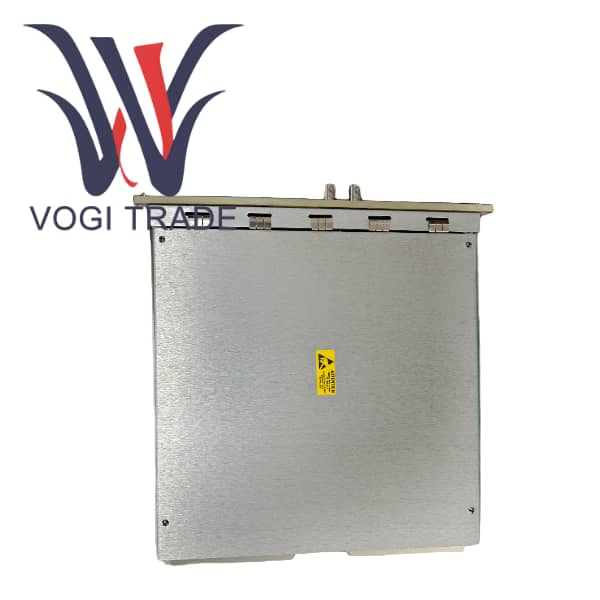
Brand: GE Description: high-density dynamic signal input terminal board Condition: Brand New Certificate: COO TEST REPORT WARRANTY LETTER Warranty: 1 year Inventory Qty: 11 Payment Term: T/T Shipping Port: Xiamen GE IS200TVBAH2AAA is a dedicated and high-performance I/O processor module designed by General Electric for its advanced Mark VIe and Mark VIeS turbine and process control systems. The official name is "Turbine Vibration and Buffer Amplifier Interface".
|
Manufacture |
GE |
|
Model Number |
IS200TVBAH2AAA |
|
Ordering Number |
IS200TVBAH2AAA |
|
Catalog |
Mark VIe |
|
Country Of Origin |
USA |
|
HS CODE |
8479909090 |
|
Dimension |
33cm*17.8cm*4.5cm |
|
Packing Dimension |
35cm*20cm*7cm |
|
Weight |
0.84kg |
Product Overview
GE IS200TVBAH2AAA is a dedicated and high-performance I/O processor module designed by General Electric for its advanced Mark VIe and Mark VIeS turbine and process control systems. The official name is "Turbine Vibration and Buffer Amplifier Interface". As one of the core components of the Mark VIe distributed I/O architecture, the TVBA card is not merely a simple signal conversion board; rather, it is an intelligent front-end processing unit.
Product Specifications and Parameters
The key specifications of IS200TVBAH2AAA are as follows
Product Series GE Mark VIe / Mark VIeS I/O System
Module Type Turbine Vibration and Buffer Amplifier Interface Card
Model IS200TVBAH2AAA
Hardware Revision H2A
Input Channel Count 4 independent buffer amplifier input channels
Input Signal Type -24V DC buffer output
Input Voltage Range -23.5V to -1.0V DC
A/D Converter Independent 16-bit ADC per channel, ensuring high resolution and accuracy
Sampling Rate Up to 10 kHz per channel, sufficient to capture high-frequency vibration events
Signal Isolation Electrical isolation between channels and between channels and ground to prevent ground loop interference, improving system noise resistance
Power and Output Specifications
Sensor Excitation Power Provides -24V DC ± 1% excitation power for each connected preamplifier
Power Current Each channel can provide a maximum of 30 mA current
Status Monitoring Continuously monitors the preamplifier power current and output voltage of each channel to detect open circuits, short circuits, or preamplifier failures
Communication and Processing
Communication Interface Connected to the controller via the I/O backplane, using high-speed Ethernet for data exchange
On-board Processing Built-in microprocessor, performing self-checks, signal conditioning, data packaging, etc., and uploading raw voltage values and diagnostic status to the controller. Note The TVBA itself does not perform FFT or alarm calculations; these are performed by the controller
Physical and Environmental
Installation Method Installed in the Mark VIe Local I/O Pack, occupying a standard I/O slot. LEDs
Green LED OK Constantly on indicates that the module is working normally
Red LED FAULT Constantly on indicates that the module has detected an internal fault or communication interruption
4 yellow LEDs CH1-CH4 Indicate the status of each channel respectively
Operating temperature -25°C to +70°C

Comparison of advantages and disadvantages
|
Advantages |
Disadvantages |
|
Deeply integrated with the unified platform management of Mark VIe reduces engineering and operation costs |
Highly proprietary, only applicable to GE Mark VIe/VIeS systems |
|
High reliability and accuracy are specially designed for industrial environments meeting the requirements of API 670 |
All analysis, alarm and protection logic are completed in the controller requires the performance of the controller |
|
Strong diagnostic capabilities monitor the health status of sensors in real time |
The functions are relatively simple focusing only on vibration/position signals |
|
Simplifies the system architecture without the need for an additional independent monitoring system reducing interfaces and fault points |
needs to be paired with a third-party sensor The sensor itself does not contain a probe, and additional probes and preamplifiers need to be purchased. |
|
Supports TMR redundancy to meet the highest safety level requirements |
|