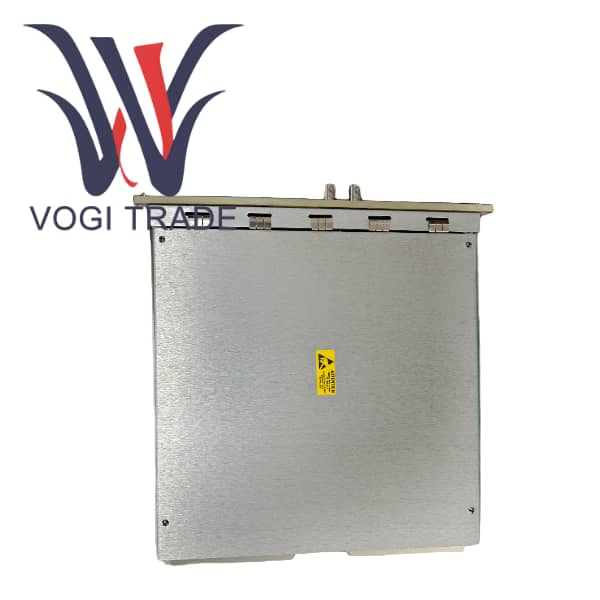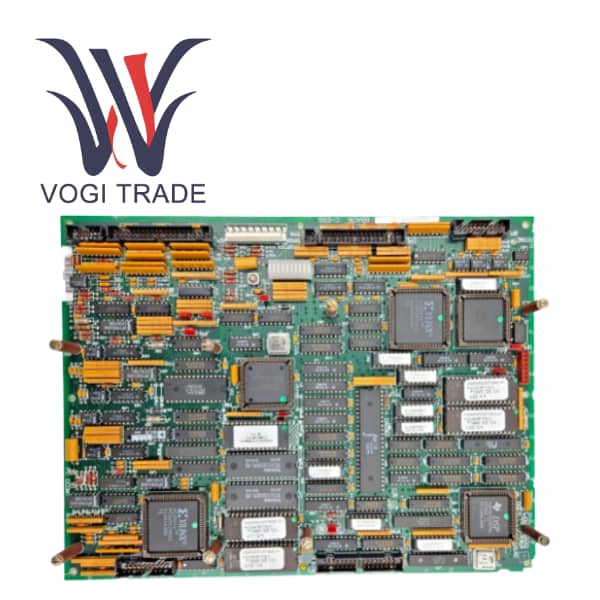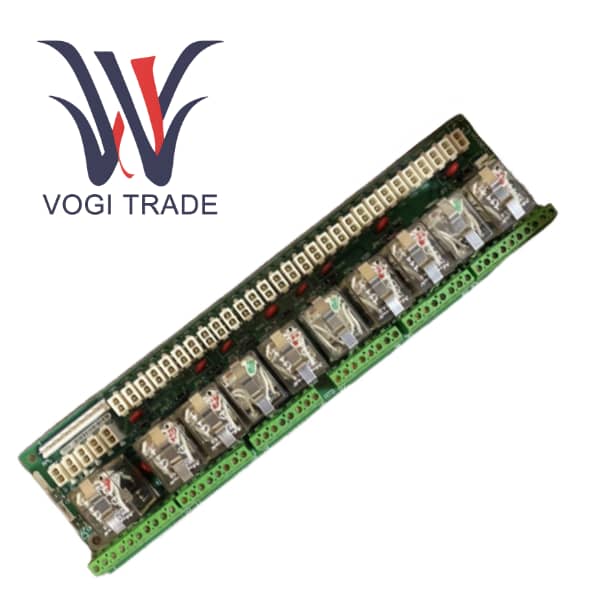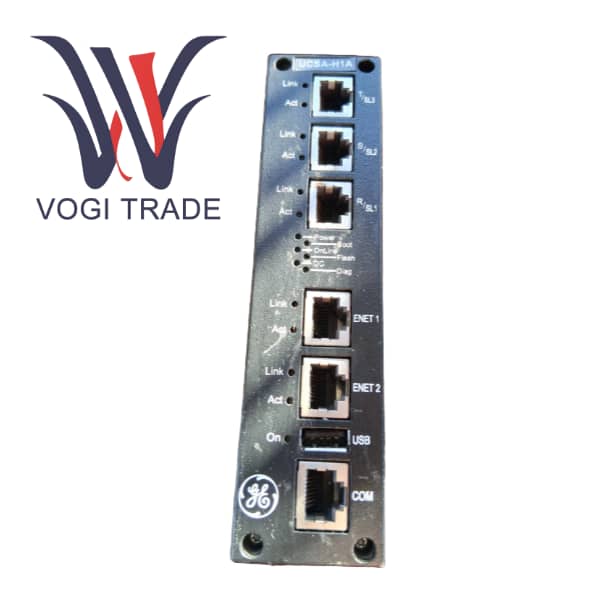
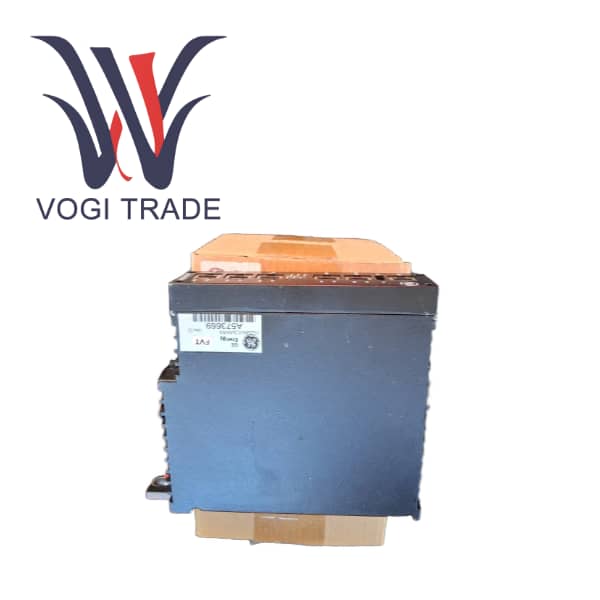
Brand: GE Description: Local Pack DC Power Distribution Board Condition: Brand New Certificate: COO TEST REPORT WARRANTY LETTER Warranty: 1 year Inventory Qty: 6 Payment Term: T/T Shipping Port: Xiamen GE IS220PPDAH1A is a crucial power infrastructure module designed by General Electric for its advanced Mark VIe and Mark VIeS turbine and process control systems. The official name is Pack Power Distribution - Local, DC.
|
Manufacture |
GE |
|
Model Number |
IS220PSCAH1A |
|
Ordering Number |
IS220PSCAH1A |
|
Catalog |
Mark VI |
|
Country Of Origin |
USA |
|
HS CODE |
8479909090 |
|
Dimension |
25cm*25cm*10cm |
|
Packing Dimension |
27cm*27cm*12cm |
|
Weight |
1.2kg |
Product Overview
GE IS220PPDAH1A is a crucial power infrastructure module designed by General Electric for its advanced Mark VIe and Mark VIeS turbine and process control systems. Its official name is Pack Power Distribution - Local, DC. This board is not a signal processing or data acquisition module; rather, it is an indispensable "energy hub" in the entire Mark VIe distributed I/O architecture. The core function of IS220PPDAH1A is to receive 28V DC control power from the upstream main power distribution module and safely, reliably, and securely distribute it to multiple I/O processor modules installed within the same local I/O package. By providing branch circuit protection and Daisy-Chain connection capabilities, IS220PPDAH1A ensures that the failure of a single I/O module will not cause the entire I/O package to lose power, thereby significantly enhancing the system's availability and maintainability.
Product Function Features
Localized and modular power distribution
The IS220PPDAH1A integrates the power distribution function into each local I/O package. This means that each I/O package becomes an independent power supply unit, no longer relying on a large number of separate power cables pulled from the central cabinet, significantly simplifying on-site wiring.
Critical branch circuit protection
The PTC self-recovery fuse is its core safety feature and enables fault isolation. If an I/O module fails due to an internal short circuit, only the PTC supplying power to that module will act, cutting off the power to the module, while other modules within the same I/O package and other parts of the I/O network will continue to operate normally. This significantly enhances the system's fault tolerance and availability.
Support for flexible distributed architecture
The Daisy-Chain function is the foundation for building Mark VIe remote I/O. The JPDH main power distribution module in the main control room can supply power to the first remote I/O package through a single cable. The IS220PPDAH1A within this I/O package then passes through the Daisy-Chain to supply power to the next I/O package, and so on, allowing for easy coverage of distances of hundreds of meters or even thousands of meters, deploying I/O points at the location closest to the field equipment.
Enhancing system reliability and maintainability
Simplified wiring reduces a large number of power cables, lowering the risk of wiring errors and fault points.
Easy maintenance enables maintenance personnel to quickly locate whether it is the PPDA board itself, upstream power supply issues, or a certain I/O module causing the PTC to act. Due to the self-recovery nature of the PTC, many overcurrent faults can automatically return to normal after resolution.
Passive, high-reliability design
As an active, semiconductor-free board, its failure rate is extremely low, and its MTBF is very high, serving as the cornerstone for the stable operation of the system.
Comparison of advantages and disadvantages
|
Advantages |
Disadvantages |
|
Outstanding fault isolation capability.The PTC protection ensures that a single point failure does not affect the entire system. |
No intelligent diagnosis. Unable to remotely monitor each current, voltage or PTC status. |
|
Significantly simplifies remote I/O wiring. The ring design is the soul of the distributed architecture. |
Highly proprietary. Only applicable to GE Mark VIe/VIeS systems. |
|
High reliability and durability. Passive design, with an extremely high MTBF. |
Single-function. Only performs power distribution and protection, without other additional functions. |
|
User-friendly maintenance. Clear fault location, PTC self-recovery reduces spare parts consumption. |
Dependent on upstream power quality. The performance is entirely dependent on the stability and quality of the 28V DC power provided by JPDH/JPDS. |