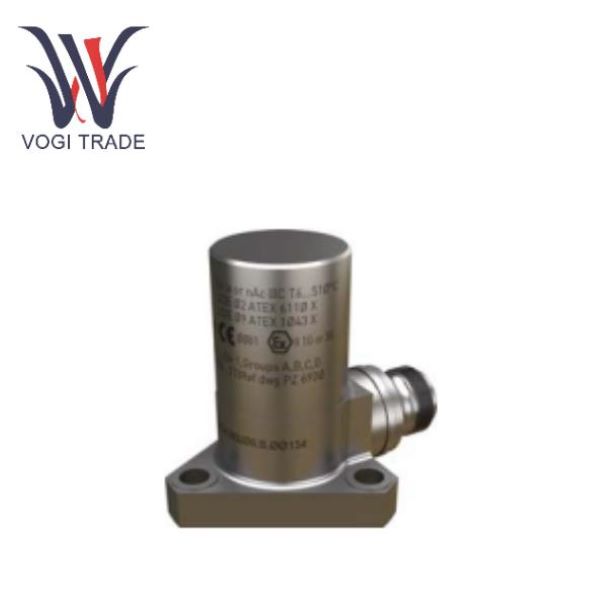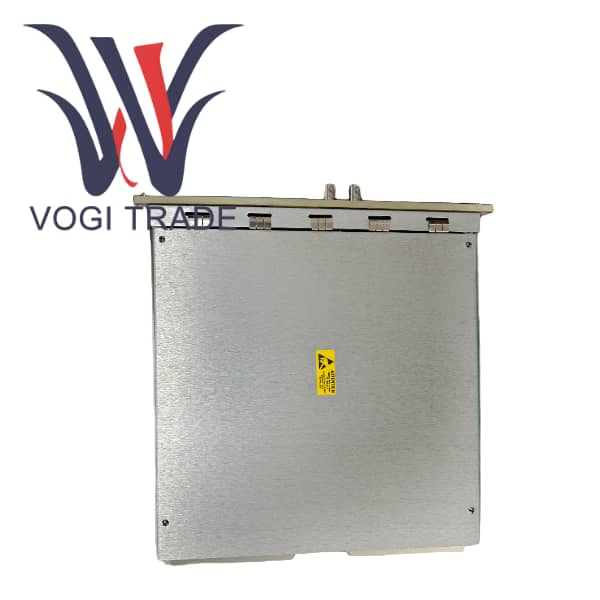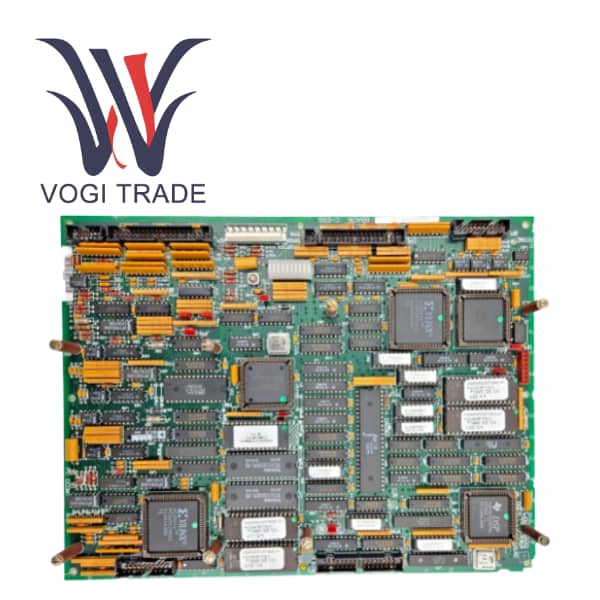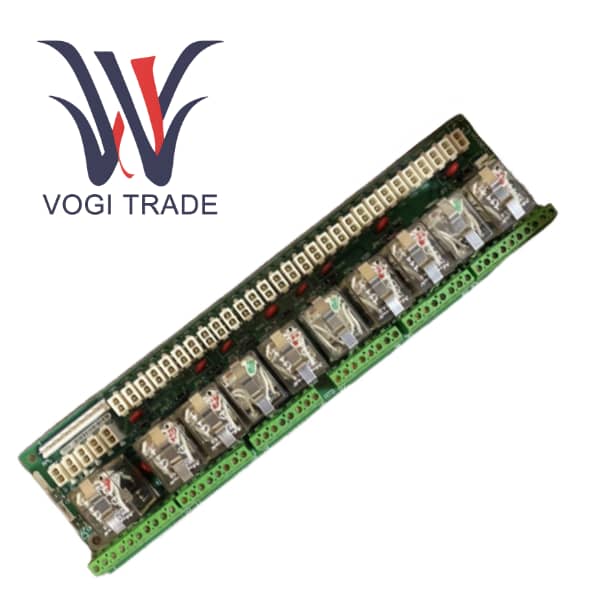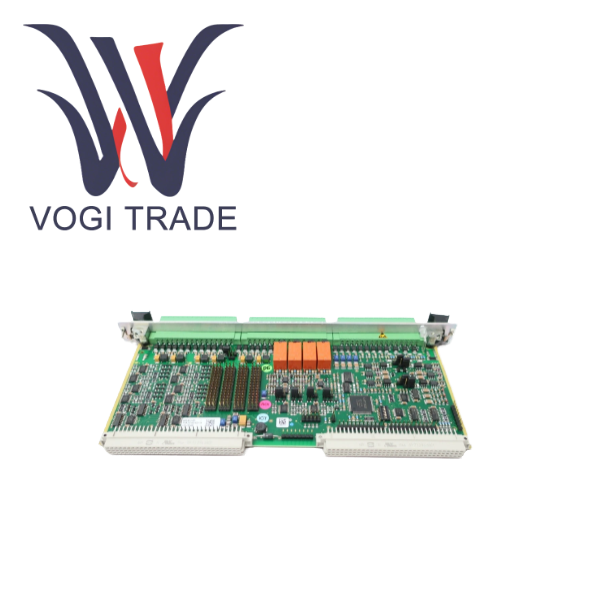
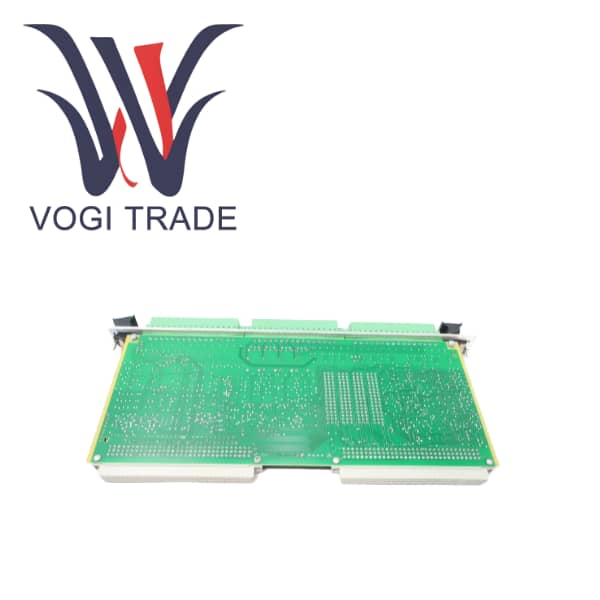
Brand: Vibro-Meter Description: Input/Output Card Condition: Brand New Certificate: COO TEST REPORT WARRANTY LETTER Warranty: 1 year Inventory Qty: 4 Payment Term: T/T Shipping Port: Xiamen IOC4T 200-560-000-HHH input/output card main function is to receive the sensor signals and pass them on to the MPC4 for processing, and to transmit the processed signals to an external system via the output interface.
|
Manufacture |
Vibro-Meter |
|
Model Number |
IOC4T |
|
Ordering Number |
200-560-000-HHH |
|
Catalog |
VM600 |
|
Country Of Origin |
Switzerland |
|
HS CODE |
8473309000 |
|
Dimension |
28*4*14cm |
|
Weight |
0.4kg |
Applicable industry scope
As the core I/O component of the VM600 system, the IOC4T 200-560-000-HHH is widely used in all industries that require continuous online condition monitoring and protection of critical rotating equipment.
In terms of energy and power, it focuses on steam turbines, generators, boiler feed water pumps and fans in thermal, hydropower and nuclear power plants.
The petrochemical industry includes large compressors, reactor agitators and pipeline pumps in oil refineries, chemical plants and natural gas processing plants.
Rolling mills and blowers in steel mills in metallurgy and mining, as well as crushers, hoists and mills in mines.
The papermaking, cement and shipbuilding industries respectively have large paper machines, rotary kilns and Marine propulsion systems.
General manufacturing, any factory that possesses large, critical rotating assets and wishes to establish a predictive maintenance system.
Detailed comparison of advantages and disadvantages
Advantages
As part of a dedicated card pair, it achieves unparalleled determinism and low latency
Hardware-level collaboration, the IOC4T 200-560-000-HHH communicates point-to-point with the MPC4 via the Industry Pack interface, which is a highly optimized and low-overhead parallel bus protocol. This ensures that the entire chain from sensor signal input to the action of the protection relay has a deterministic delay at the microsecond level. In mechanical protection scenarios that require rapid response, this certainty is unmatched by general data acquisition systems.
Eliminating the uncertainty of the software stack, the entire signal processing and logical judgment are completed on the dedicated processor of MPC4, without relying on the scheduling of the general operating system. This avoids the response time jitter caused by the switching of operating system tasks or network congestion, ensuring the absolute reliability of the protection function.
High-density I/O integration significantly reduces system complexity and cost
The space efficiency is integrated on a standard 20mm wide European card, featuring 4 vibration inputs, 2 speed inputs, 4 relays, 4 analog outputs and 4 raw signal buffers. This high-density design means that monitoring a complex four-bearing machine usually only requires a pair of MPC4/IOC4T cards, greatly saving valuable rack slots.
The wiring is simplified, with all I/O concentrated at the rear of the card and led out through three standardized screw terminal blocks. This makes on-site wiring clear and orderly, reduces the possibility of wiring errors, and simplifies future maintenance and troubleshooting work. Compared with the distributed I/O solution, the cable usage and wiring time are significantly reduced.
Disadvantage
Mandatory pairing dependencies lead to system lock-in and cost rigidity
Supplier locking, 200-560-000-HHH is completely dependent on Meggitt's MPC4 card and VM600 platform. Once this solution is selected, the future expansion of the entire monitoring system, spare parts procurement and technical support will all be locked within Meggitt's ecosystem. This limits the possibility for users to adopt more cost-effective or technologically advanced third-party solutions in the future.
The cost of the smallest unit is high. The smallest functional unit of the system is a pair of cards. Even if only a simple single-bearing pump needs to be monitored, the entire set must be purchased, resulting in a very high unit channel cost in small-scale applications. In contrast, modular universal data acquisition systems can purchase channels as needed.
Platform generation limit, 200-560-000-HHH is only applicable to the VM600 platform. When users wish to migrate to the updated VM600 Mk2 platform to achieve higher performance or new features, all existing IOC4T/MPC4 cards cannot be reused, resulting in sunk costs.
The hidden engineering traps caused by differences in hardware versions
The output impedance of 2000Ω vs. 50Ω is one of the most concealed and dangerous drawbacks of this product line. If engineers discover in the later stage of the project that the earlier version they are using cannot drive the long-distance "original signal" cable, they will face expensive rework. Either replace all IOC4T cards or add an external buffer amplifier behind each card.
RoHS compliance risks, in regions with strict environmental protection regulations such as the European Union and China, using early versions that are not RoHS compliant may result in the entire project failing to pass acceptance or incurring high special treatment costs when the equipment is scrapped. If the later hardware version is not clearly specified during procurement, it will plant huge compliance risks.