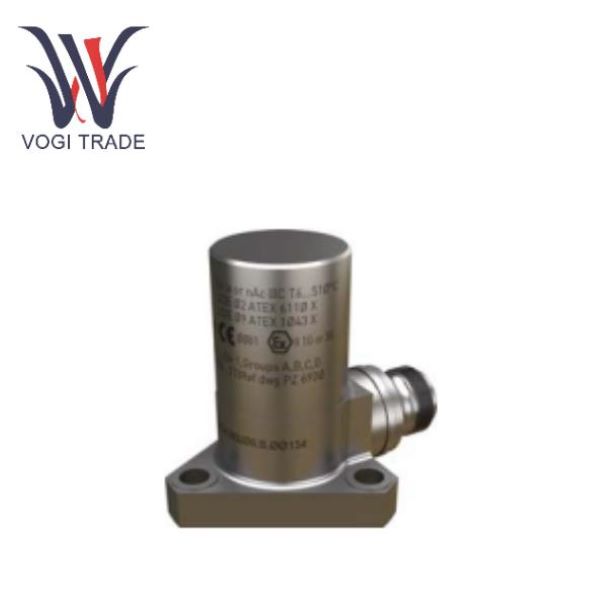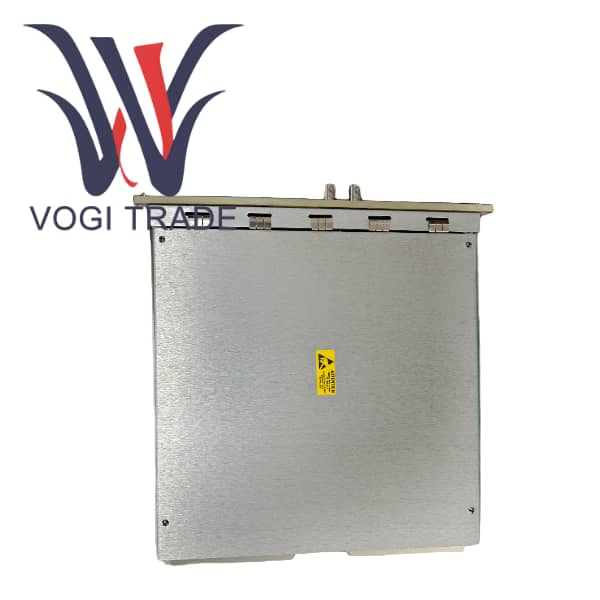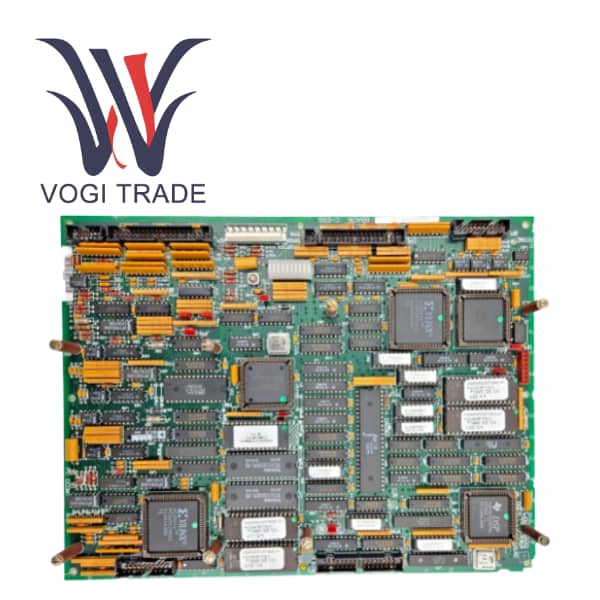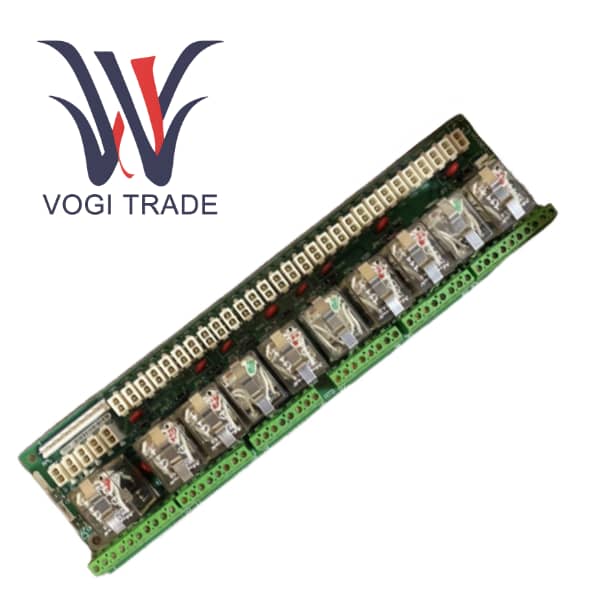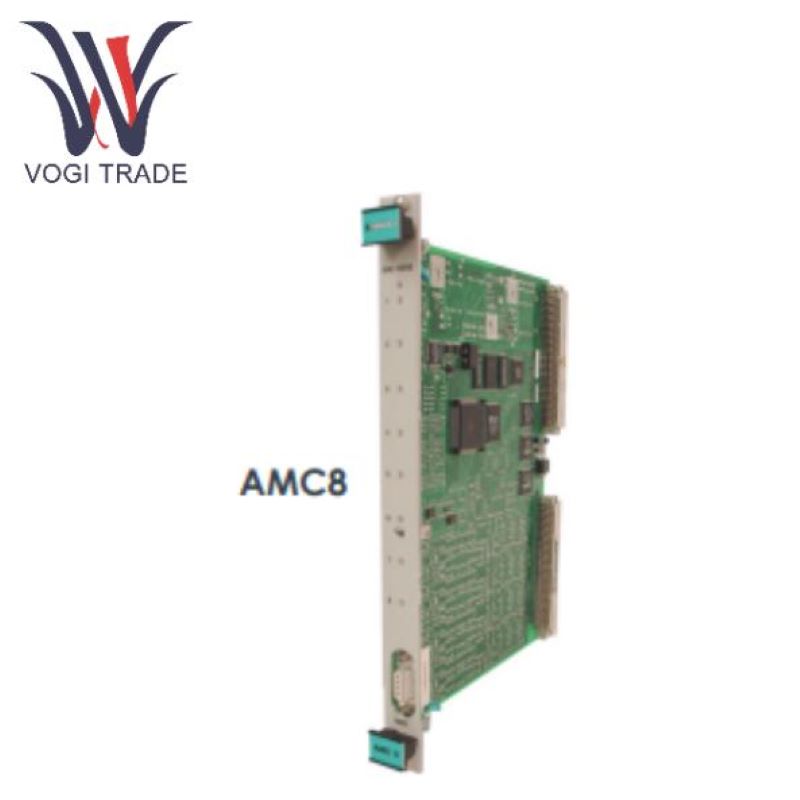
Brand: Vibro-Meter Description: Analog monitoring card Condition:New Certificate:COO TEST REPORT WARRANTY LETTER Warranty:1 year Inventory Qty:2 Payment term:T/T Shipping Port:Xiamen The AMC8 200-550-003-112 is an analog monitoring card designed for use with the VM600 rack-based systems for machinery monitoring and protection applications, from Meggitt’s Vibro-Meter product line. This versatile card is capable of measuring and monitoring up to eight analog signal inputs simultaneously.
The AMC8 200-550-003-112 is a standard 8-channel analog monitoring card for the Vibra-meter VM600 system. It needs to be used in pairs with the IOC8T input/output card and is specially designed for monitoring the temperature and process parameters of rotating machinery and interlock protection. Single-card compatible with thermocouples and multi-specification thermal resistors, supporting cold junction compensation, multi-channel mathematical operations and hierarchical programmable alarm. It is equipped with 4 local relays and can be expanded with multiple external relays, synchronously outputting standard analog signals of 4~25mA. Supports hot-swapping, hardware self-checking, and dual communication configuration modes, ensuring stable operation over a wide industrial temperature range.
|
Manufacture |
Vibro-Meter |
|
Model Number |
VM600 AMC8 |
|
Ordering Number |
200-550-003-112 |
|
Catalog |
analog monitoring card |
|
Country Of Origin |
Switzerland |
|
Humidity |
0 to 90%, non-condensing |
|
Temperature |
−25 to 65°C (−13 to 149°F) |
|
Vibration approvals |
IEC 60255-21-1 (Class 2) |
|
Weight |
0.25 kg, 0.55lb |
Product Features
This model is the standard version of the AMC8 analog monitoring card; it requires the IOC8T (200-580-000-1Hh) to form a matched card pair. Its core functions are as follows:
1. 8-Channel Multi-Type Signal Acquisition: Software-configurable signal types per channel, including thermocouples (TC), Pt/Ni/Cu RTDs, and 0–25mA current or 0–10V voltage process signals. Supports 2/3/4-wire RTD configurations and E/J/K/T-type thermocouples; features dual-channel cold junction compensation (CJC) for temperature measurement applications.
2. Multi-Dimensional Data Processing: Supports mean, maximum, and minimum filtering per channel; enables batch calculations across the 8 channels—such as temperature differentials, multi-channel averages, and extreme values—with a refresh cycle of ≤100ms.
3. Tiered Alarm Logic: User-defined thresholds for OK, Alert, and Danger states; supports time delay, hysteresis, and latching/non-latching modes; includes 16 basic and 8 advanced built-in alarm combinations.
4. Multi-Channel Output Linkage: IOC8T features 4 local relays; supports expansion via rack Raw/OC buses to RLC16/IRC4 relay modules; provides 8 channels of 4–25mA analog retransmission output (voltage output optional).
5. System Interaction and Diagnostics: Local configuration via front-panel RS232; Ethernet/fieldbus communication enabled by VME bus integration with CPUx cards; includes full-board self-test, channel fault detection, and slot-mismatch protection; tri-color (red/green/yellow) LEDs indicate system and channel status; supports external dry-contact control for Alarm Reset (AR) and Danger Bypass (DB); supports hot-swapping without disrupting the operation of other cards in the rack.
Product Advantages
Exceptional Channel Compatibility
A single module integrates temperature, current, and voltage analog inputs, eliminating the need for module swaps; one hardware setup covers both unit temperature monitoring and process parameter acquisition.
Highly Reliable Industrial Design
Supports hot-swapping for online maintenance and isolates faulty slots; features onboard self-diagnostics and wire-break detection; operates across a wide temperature range (-25°C to 65°C); moisture- and vibration-resistant; compliant with the API 670 standard for rotating machinery.
Flexible Expansion Capabilities
Expands to 32 external relays beyond the 4 onboard relays; supports transmitter output loads up to 440Ω, suitable for long-distance signal transmission.
High Configuration Flexibility
Independent parameter configuration for all channels; supports extensive mathematical operations and complex alarm logic to meet unit interlocking protection requirements.
Standardization and Compliance
Certified for CE, EAC, RoHS, and IEC electromagnetic compatibility; suitable for the oil & gas and power industries, as well as export projects.
Convenient Operation and Maintenance
Front-panel LEDs provide intuitive alarm indications; supports remote firmware upgrades without requiring system shutdown or module removal.
1. Hardware Installation
Insert the AMC8 into the front slot of the VM600 rack and install the corresponding IOC8T in the rear slot; slot coding ensures automatic verification and error prevention;
Connect sensor cables to IOC8T J1/J2 (channels 1–8), the transmitter output to J3, and relay contacts to J4;
Connect DSI dry contacts for alarm reset and danger bypass functions; power up the rack, and the system automatically identifies and pairs the cards.
2. Software Configuration (VM600 MPSx)
Local commissioning: Connect the PC serial port to the AMC8 front panel RS232 port; system networking: connect the software via the CPUx card's Ethernet port;
Hardware configuration: Select the AMC8 standard model and define parameters for each channel—sensor type (TC/RTD/current/voltage), temperature measurement range, and cold-junction compensation channel;
Calculation configuration: Enable single-channel filtering or multi-channel averaging/temperature difference calculations;
Alarm settings: Configure tiered thresholds (pre-alarm and danger), time delays, and hysteresis; assign local or expansion relays;
Output configuration: Set the 4–25 mA transmitter range mapping to match DCS display units;
Download parameters to the card, save the project, and perform remote firmware upgrades.
3. Routine Operation and Maintenance
Monitor panel LEDs: Green (Normal), Yellow (Pre-alarm), Red (Fault);
Hot-swap cards without system downtime;
Use MPSx to read real-time data, alarm history, and channel fault logs.