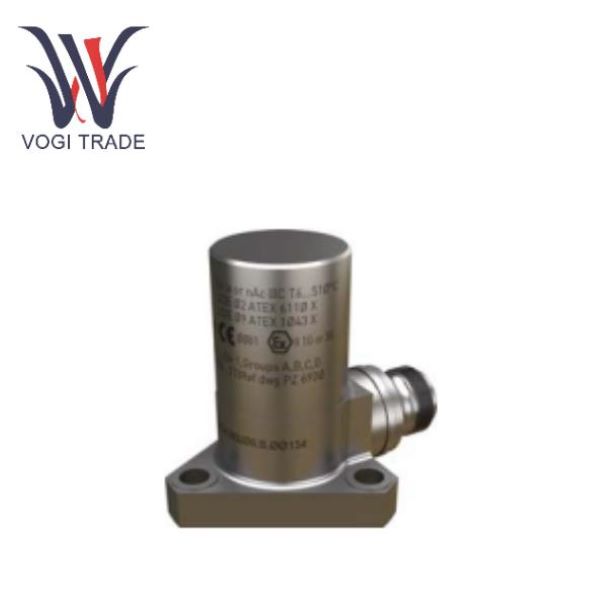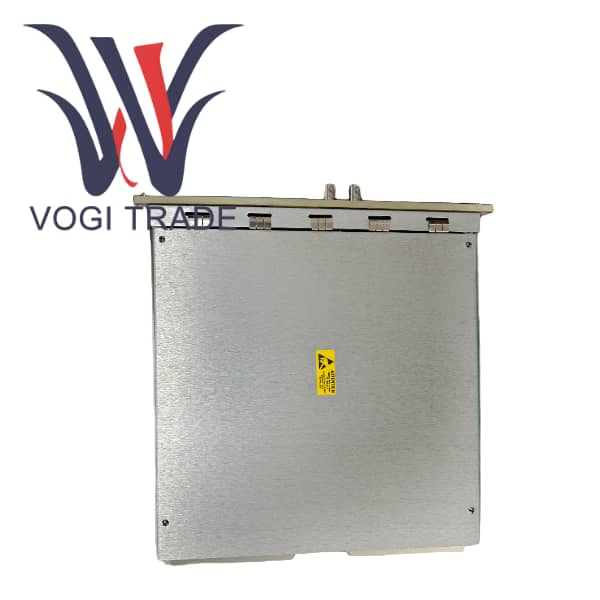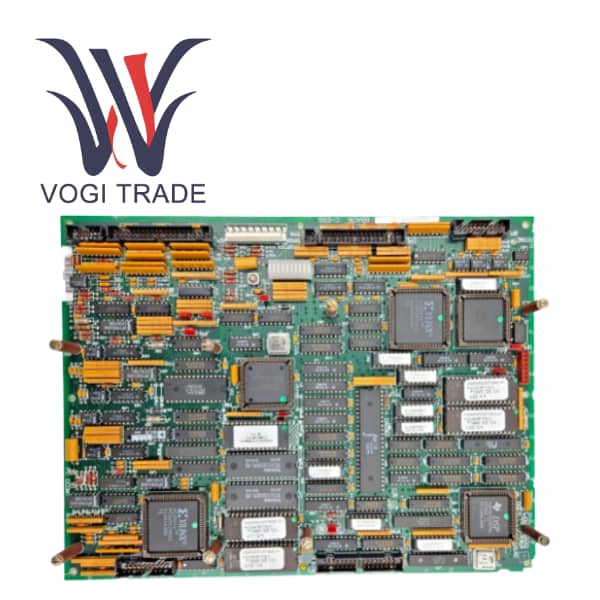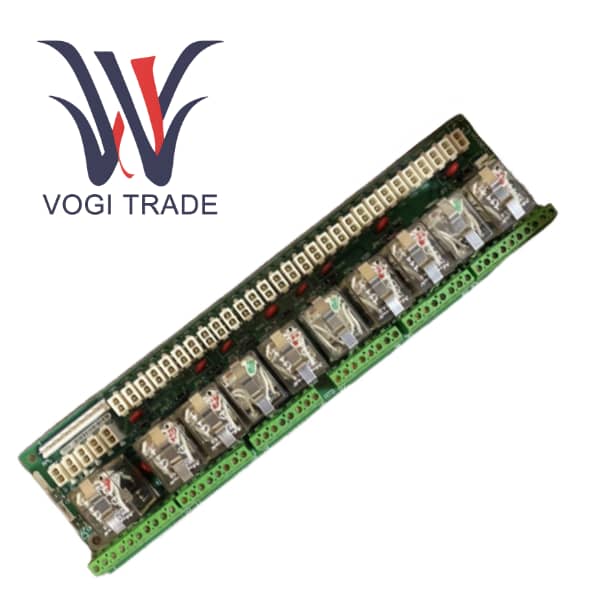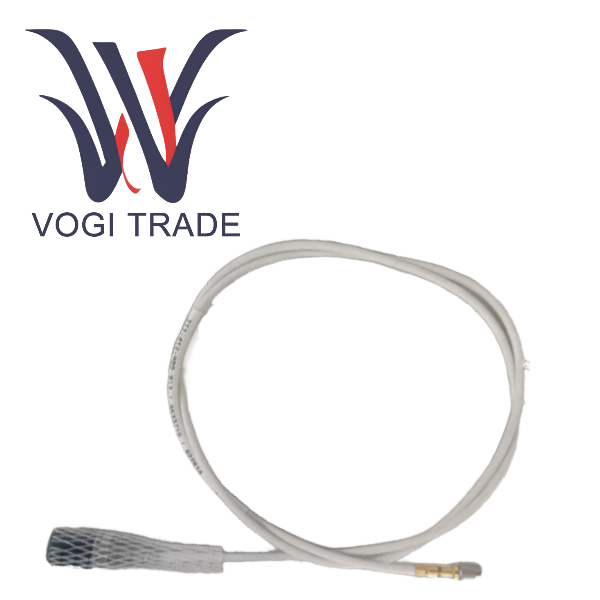
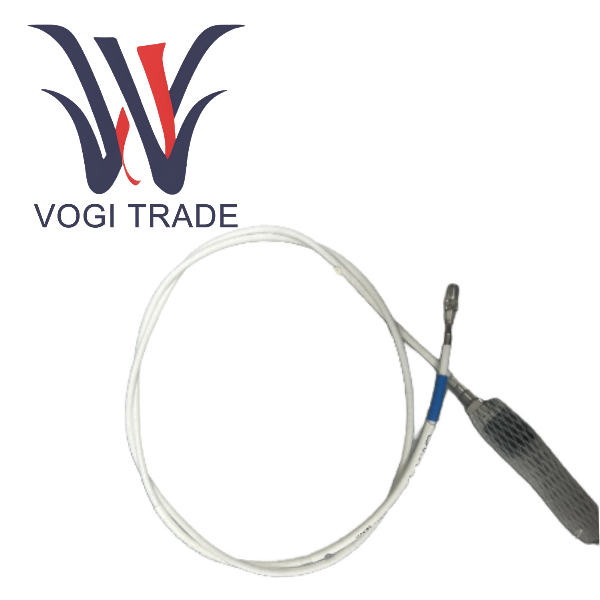
Brand: Vibro-Meter Description:Proximity Transducer Condition: New Warranty: 1 year Inventory Qty: 1 Payment term: T/T Shipping Port: Xiamen TQ412 111-412-000-013-A1-B1-E050-F2-G050-H05 is an industrial vibration monitoring module produced by Vibro-Meter, mainly used for vibration protection and monitoring of rotating machinery.
|
Manufacture |
Vibro-Meter |
|
Model Number |
TQ412 |
|
Ordering Number |
111-412-000-013-A1-B1-E050-F2-G050-H05 |
|
Catalog |
Probes & Sensors |
|
Country Of Origin |
Switzerland |
|
HS CODE |
8537109090 |
|
Dimension |
26.2cm*12.5cm*2cm |
|
Packing Dimension |
28.2cm*14.5cm*4cm |
|
Weight |
0.3kg |
Product Overview
TQ412 111-412-000-013-A1-B1-E050-F2-G050-H05 is a high-performance, non-contact eddy current displacement sensor produced by Parker Meggitt. The TQ412 product belongs to the close measurement system product line and is specifically designed for precisely measuring the relative vibration and axial displacement of rotating mechanical shafts in harsh industrial environments.
The model code is parsed as follows
111-412-000-013 Basic product number, indicating a TQ412 series sensor.
A1 Environmental option, indicating the standard industrial version, without explosion-proof certification
B1 Thread type, M10 x 1 metric thread
E050 Built-in cable length, an integrated FEP coaxial cable of 5.0 meters ± 0.5 meters
F2 Optional protection, a flexible stainless steel hose with FEP sheath
G050 Flexible hose length, a protective hose that is 5.0 meters long.
H05 Total System Length, this sensor is designed to form a complete measurement chain of 5 meters. In this configuration, since the built-in cable is already 5 meters, there is usually no need to extend the cable EA402 additionally.
TQ412 111-412-000-013-A1-B1-E050-F2-G050-H05 is a Reverse Mount sensor, characterized by the signal cable being led out from the rear of the sensor instead of passing through the mounting thread. This design is particularly suitable for applications where installation space is limited, wiring cannot be done from the front end, or where cables need to be led out along a specific path, such as inside bearing housings, in narrow casings, or near couplings.
Product Specifications and Parameters
Measurement principle Eddy Current
Frequency response DC to 20 kHz (-3 dB)
Probe size Probe diameter Ø 8.2mm, hex wrench size 14mm
Operating temperature range
Sensor body -40°C to +180°C
Short-term survival temperature +180°C to +220°C
Sensors and cables -40°C to +195°C
Anti-vibration capacity 5g peak
Impact resistance capacity 15g peak
This order is configured with specific parameters
Thread M10 x 1 metric
Built-in cable length E 5.0m ± 0.5m
Optional protection F2 Flexible stainless steel hose + FEP sheath
Advantages of FEP sheath TQ412 is resistant to almost all chemicals, has extremely low permeability to liquids, gases and moisture, and also features flexibility, a low coefficient of friction and excellent mechanical toughness.
Flexible hose length G 5.0m. According to the ordering rules, the maximum length = the length of the built-in cable - 200mm = 4.8m. Here, G050 should be understood as the effective protective length that covers most of the cables.
Total system length H 5 meters
Product functional features
The core design of the reverse-mounted structure for solving extreme installation problems
The physical layout enables the signal cable to be axially led out from the tail of the sensor body instead of passing through the front end of the thread. This enables the cable to be freely laid out along the axial or radial direction after the sensor is installed, avoiding the problem that traditional upright sensors cannot be wired due to insufficient space in front.
Typical application scenarios
TQ412 111-412-000-013-A1-B1-E050-F2-G050-H05 can be installed in the blind hole inside the bearing housing, with no operating space in front.
A narrow area close to the coupling, sealing cavity or the inner wall of the casing.
In situations where multiple sensor cables need to be led out from the same side to simplify the layout of the cable tray
The engineering advantages are reflected in significantly reducing the restrictions of mechanical design on monitoring points, transforming the originally "unmeasurable" key positions into "measurable" ones, and enhancing the coverage rate of overall machine status perception.